Nipo Saldana: Who Carlos Galán Is, and What Is Documented
The name nipo saldana arrives with a ready-made biography: a full name, a birth date, a birthplace, three film titles and a famous sister. Some of that biography is documented in records that can be opened and read. The rest was written by biography pages copying one another until repetition started to look like evidence.
What the documents actually hold is narrower and more interesting. A Dominican rapper named Carlos Galán, who records as Nipo 809, is named in the reference record as the half-brother of the actress Zoë Saldaña. His music has a streaming trail that opens in 2009. Almost everything else in the circulating profile — the date, the films, the longer name — is asserted by the copies and supported by nothing behind them.
The method here is the one this run always uses. Below, the ranking guide is taken apart section by section and audited — its table kept intact as the first exhibit — and each claim it makes is tested against the reference record, the music catalogues and the subject’s own channels. Whatever survives the checking is stated as fact; whatever does not is tabled as a claim, with its claimant attached.
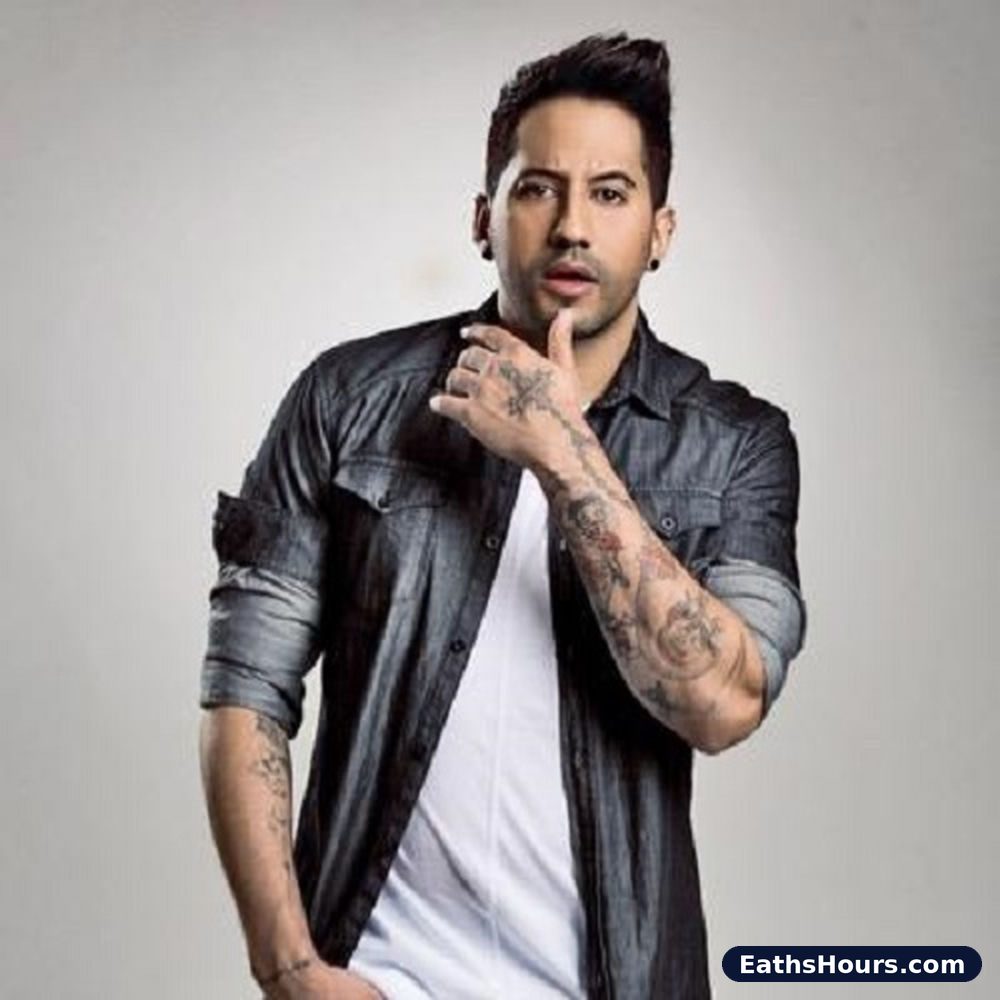
Nipo Saldana Biography Table
The guide opens with its biography table, printed here word for word, because the table is where this profile is most honest and most misleading at the same time. Its two hedged cells — a birth date “Not Publicly Known”, a birthplace only “Possibly Dominican Republic” — are the most accurate lines in it. Its first cell is the problem: the “Full Name” it prints is not a name from any document. It is the search term itself, dressed as a fact.
| Attribute | Details |
|---|---|
| Full Name | Nipo Saldana |
| Profession | Singer, Influencer, Content Creator |
| Date of Birth | Not Publicly Known |
| Place of Birth | Possibly Dominican Republic |
| Nationality | Dominican |
| Famous For | Urban music and viral content |
| Languages | Spanish |
| Social Media Presence | Active on Instagram, TikTok, YouTube |
| Genres | Urban, Reggaeton, Trap |
Read against the record, the table is a mixture. The nationality, the language and the social platforms all stand. The profession cell undersells the documented work — the catalogues show a recording artist and producer, not primarily an influencer. And the name cell conceals the one genuinely documented fact about this man, which the guide never prints anywhere: his surname, in every record that carries one, is Galán.
The Checks: Claim by Claim
This run checks claims in a fixed order, and this name received the same treatment as xucvihkds, why kiolopobgofit important, g15tools com gadget and classroom-x15 before it: documents first, storytellers last. For a living musician the documents are the reference record and the music catalogues; after them come his own channels; the biography pages come last of all, since on this name they largely quote one another. Each claim the competitor prints — and each addition its copies pile on — went through that order. The census:
| Claim | Where it appears | What the checks found |
|---|---|---|
| His real name is Carlos Galán | Spanish Wikipedia, in Zoë Saldaña’s biography | Stands — the documented name, printed there in a single sentence with published sources behind it |
| He is Zoë Saldaña’s half-brother | Spanish Wikipedia; the copies | Stands — the record’s word is “medio hermano”: her stepfather Dagoberto Galán is his father. The copies’ headlines drop the “half” |
| His full name is Carlos Dagoberto Galán Pepén | The copies and a fan wiki | Unverified — no document behind it. The documented record gives “Carlos Galán” and nothing more |
| He was born on 9 August 1981 | The copies only | Unverified — the competitor’s own table concedes the date is “Not Publicly Known”, and no statement or document supports the copies’ precision |
| He was born in Santo Domingo Este | The copies only | Unverified, and contradicted — his own channel description places his birth in the capital’s San Antón / San Miguel sector and his upbringing in Ensanche Luperón |
| He acted in Dos policías en apuros (2016), Voces de la Calle (2017) and Héroes de Junio (2019) | The copies only | Unverified — the films are real Dominican productions, and Voces de la Calle carries an IMDb title record dated 2017, but no cast record checked names him in any of them |
| He has been active since about 2018 | The copies’ framing | Contradicted — the streaming record opens in 2009, where he is credited simply as “Nipo” |
| A net worth figure | Asked on every copy, answered on none | None exists — the copies themselves concede no confirmed figure, and none is printed here |
| The 2019 Diario Libre story | Diario Libre, 10 July 2019, cited by two Wikipedia articles | Stands as a press record — the newspaper reported his assertion about the urban genre; it documents a controversy, not a biography |
Two features of that census deserve emphasis. First, the single strongest document in this man’s entire footprint is one sentence in somebody else’s biography — his half-sister’s. Second, the competitor’s table, for all its faults, never prints the birth date, the birthplace or the films as fact. Those arrive from the copies around it. The guide hedged; the cluster did not.
Who Is Nipo Saldana?
Stripped to what can be shown, the answer is this. Nipo Saldana is the name the biography pages use for Carlos Galán, a Dominican rapper and producer who records as Nipo 809. He is documented — in the Spanish-language Wikipedia biography of Zoë Saldaña, resting on published Dominican sources — as the actress’s half-brother, the son of her stepfather. He has released music under the Nipo 809 name for well over a decade, runs his own label imprint, and keeps an active channel under the same handle.
One detail on the competitor’s page points, accidentally, at the real record. In this section the guide hangs an outbound link on his name, sending readers to diariolibre.com — the Dominican national newspaper. The link is part of this competitor’s recurring pattern of injected anchors and is not reproduced here. But the destination is telling: Diario Libre is the one substantial newsroom that has covered him, in 2019, and its story is part of the citation chain underneath the Wikipedia sentence that documents who he is. The guide’s furniture brushes against the evidence its text never uses.
Early Life and Cultural Influence
Almost nothing about his early life is documented, and this article will not manufacture any. What exists is a self-description: his own channel’s description, as mirrored by channel-analytics sites, says he was born in the San Antón / San Miguel sector of Santo Domingo, grew up in Ensanche Luperón and lives in Villa Duarte. That is a man’s account of himself, carried here at exactly that strength — his words about his own neighbourhoods, not a verified record.
Against it, the copies print Santo Domingo Este as his birthplace, with no source at all. The two accounts cannot both be right, and nothing independent settles between them, so neither is promoted here to fact. What can be said without strain is narrower: he is Dominican, from the capital’s popular barrios by his own account, and the music catalogues show him working inside that city’s urban scene from his earliest credits. The cultural-influence language of the guide — authenticity, street culture, slang — is the standard vocabulary of these profiles. The checkable version of the same point is in the next sections: a long career, spent largely on other artists’ records as well as his own, inside Dominican urban music.
The Documented Record: A Half-Brother in a Famous Family
The family record, as the reference literature prints it, runs as follows. Zoë Saldaña’s father died when she was nine. Her widowed mother, Asalia, later married Dagoberto Galán, who became stepfather to Zoë and her sisters Cisely and Mariel, and whom the girls regard fully as their father. The biography then adds one sentence, in Spanish: “El rapero dominicano Carlos Galán, conocido como Nipo 809 es medio hermano de Saldaña” — the Dominican rapper Carlos Galán, known as Nipo 809, is Saldaña’s half-brother.
That sentence does a great deal of work. It supplies his real name (Galán, not Saldana), his stage name (Nipo 809), his occupation (rapper) and his exact place in the family (half-brother, through the stepfather). It is also, notably, the only place in the reference record where he appears at all: he has no biography of his own in any encyclopaedia checked, in any language. The copies that call him simply Zoë Saldaña’s “brother” in their headlines are overstating even this — the documented relation is a half-brother’s, and the distinction matters to a record that contains so little else.
The surname in the search term deserves its own note. “Saldana” is his half-sister’s famous name. No document gives it to him. The biography cluster built “Nipo Saldana” out of the two names a searcher would type — his stage name and her surname — and the construction then circulated as though it were his name. It is a search term, not an identity, and this article uses it only as one.
Music Career and Style
Here, at last, the record is thick, because music leaves catalogues. The streaming services carry an artist page for Nipo809 — Apple classifies the genre as Urbano latino — and the trail of releases is long. It opens in 2009, on the album Mambo + Rap 809, where a track called “He Sobrevivido” credits him simply as Nipo, alongside Jim Graf, Rubirosa and Villaman. A 2013 feature (“El Virao”, with Angel Pa) and a 2014 posse cut, “Come To My Hood (De los Pobres)”, which places him on the same record as the veteran Don Chezina, carry the trail through the decade.
The collaborations widen as the scene’s generations mix. “Comienza La Clase, Pt. 1” pairs him with DKANO. In 2020 the official video for “Triangulo Del Rap” put him alongside Quimico Ultramega and Mandrake El Malocorita. In 2022 he appeared on “PIMPON-X” with Lápiz Conciente, one of Dominican rap’s most respected lyricists, and released “El Wiky” with Sujeto Oro 24 and DobleT y El Crock on the label El Salon De La Justicia — his own imprint, as the next section shows. Solo singles and features continue through “Déjame Caer” in 2024 and an instrumental single, “Skull”, in October 2025, with a further feature credit in 2026. Deezer’s catalogue counts 42 releases under the artist name. Measured against the catalogue, the guide’s genres cell — urban, reggaeton, trap — is roughly the shape of the platform classification, and its claim of collaborations with other Dominican artists is the one career claim that understates the evidence.
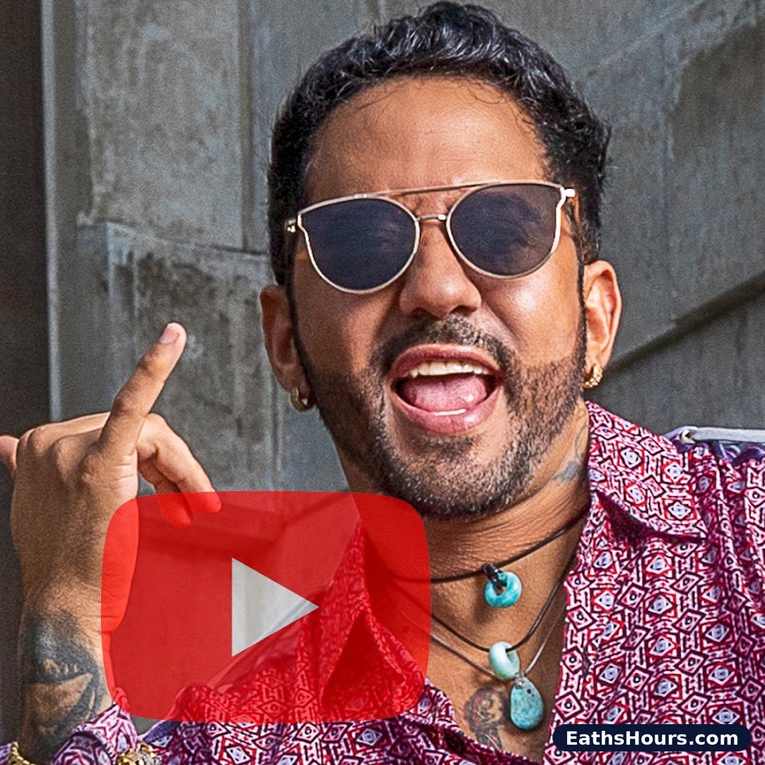
The style the catalogues imply is a scene insider’s rather than a hitmaker’s: features, posse cuts, production work and a steady drip of singles across sixteen years. Nothing in the record supports the guide’s “rising star” framing — a man with a 2009 credit is not rising, he is established at the level the Dominican urban scene actually sustains, which is a different and more honest compliment.
Social Media and Online Presence
His own channels are the second pillar of the documented record. The YouTube channel under the Nipo809 name dates to 2017 by the analytics mirrors’ account, holds well over a hundred videos, and sits in the tens of thousands of subscribers at their last count — a working artist’s channel, not a celebrity’s. The handle @Nipo809 recurs across platforms, matching the one cell of the competitor’s table (“Active on Instagram, TikTok, YouTube”) that the record broadly supports, though the TikTok presence was not independently audited for this article.
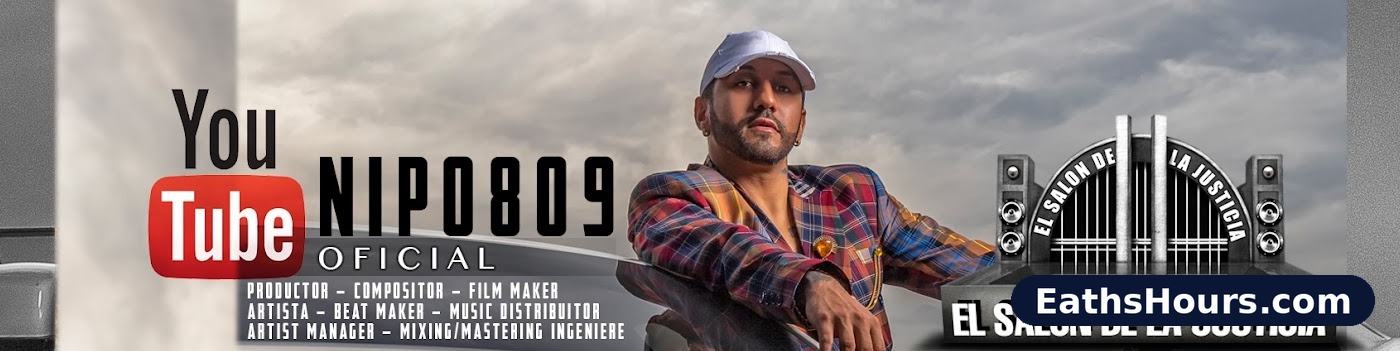
The most informative artefact is his channel banner, reproduced in this article’s third image. It styles him “NIPO809 OFICIAL” and lists his trades in his own words: producer, composer, film maker, artist, beat maker, music distributor, artist manager, mixing and mastering engineer — beside the gate logo of El Salon de la Justicia, the label that released “El Wiky” in 2022. Self-description is not verification, but it is evidence of how he presents his work: as a tradesman of the urban-music business, wearing most of its hats at once. That presentation fits the catalogue record — the features, the production-adjacent roles, the label credit — better than the guide’s “influencer” framing does.
Personal Life and Controversies
Of his personal life, nothing beyond the family record above is documented: no spouse, no children, no residence beyond his own channel’s neighbourhood names appear in any source checked, and this article prints none. The copies respect that silence too, mostly because they have nothing to copy.
The controversies, though, have one genuine entry. On 10 July 2019 the Dominican national newspaper Diario Libre published a story headlined, in Spanish, “Exponente Nipo asegura que hay homosexuales en el género urbano” — the artist Nipo asserts that there are homosexuals in the urban genre. The story reported his claim that closeted gay artists existed in Dominican urban music, and it was considered notable enough that two Wikipedia articles cite it to this day: his half-sister’s biography, where it helps source the sentence that documents him, and the article on La Delfy, the Dominican artist whose own story intersects with the episode. That is the whole documented controversy file: one newspaper story, in which he figures as a man making a provocative claim about his own industry. The guide’s talk of “online confrontations” and “defending his roots” has no documented incident behind it that the checks could find. The 2019 story is reported here for exactly what it is — a press record of his assertion — and neither endorsed nor embellished.
Nipo Saldana’s Impact on Dominican Urban Culture
Measured by the record rather than the rhetoric, his impact is the cumulative kind. Sixteen years of releases place him inside the scene’s working fabric: an early credit in the mambo-rap era, a 2014 record beside Don Chezina, a 2020 video beside Quimico Ultramega, a 2022 track beside Lápiz Conciente, and his own label issuing music by 2022. Roundups of old-school Dominican dembow still list his name among the era’s acts. Artists who last that long in a scene shape it in the aggregate — as collaborators, producers and reference points — even when no single hit carries their name to the international audience the guide imagines for him.
What the record does not show is the guide’s version: an influential figure “elevating Dominican urban music” for international audiences. No international chart entry, award or major-press profile under his name was found in any record checked. The honest summary is that his documented significance is local, durable and collaborative — and that the one time his name travelled internationally, it travelled as a line in his half-sister’s biography.
The Name Itself: Nipo, 809 and Saldana
The stage name repays a minute’s attention, because two of its three parts can be accounted for and one cannot. The “809” is the Dominican Republic’s original telephone area code — the code the whole country shared before the 829 and 849 overlays — and it functions in Dominican music as a badge of national origin, worn by artists the way an area code is worn in American rap. “Saldana”, as established above, is not his name at all: it is his half-sister’s surname, attached by the biography pages. And “Nipo” itself is explained nowhere — no interview, profile or statement found in the checks says what it shortens, commemorates or means. It is simply the name he has recorded under since at least 2009, first alone and then with the area code attached. A profile that cannot explain its subject’s own name is a profile built from the outside, and that, in the end, is what the circulating biography of “Nipo Saldana” is.
Business Ventures and Brand Collaborations
The guide looks forward to brand collaborations, merchandise and, eventually, a music label of his own. The checks found the label — in the past tense. El Salon De La Justicia released “El Wiky” in 2022 with Nipo809 as an artist on the record, and his own channel banner carries the label’s logo and describes him with the business’s own vocabulary: music distributor, artist manager, producer. Whatever the imprint’s formal structure, the documented position is that he was operating one years before the guide predicted he might.
For the rest, nothing. No brand collaboration, merchandise line or endorsement under his name appears in any record checked, and the guide’s reasoning from his wardrobe — that a streetwear look makes him an obvious match for clothing brands — is the profile genre’s filler, printed here only as its claim. The business record that stands is the unglamorous one already documented: a working label imprint and a one-man list of production trades on his own banner.
Future Plans and Projects
The guide forecasts a full-length album, podcasting and social advocacy, and floats films and documentaries. No announcement of any of these was found in any record checked, and the film claims collapse into the unverified acting credits already censused above. What the record shows instead of plans is continuation: the catalogue’s most recent entries are a solo instrumental single in October 2025 and a feature credit in 2026. For an artist whose documented pattern is steady work rather than announced projects, the releases themselves are the only reliable forecast, and they point the same way they have pointed since 2009.
What Cannot Be Verified
It is worth gathering the blanks in one place, because on this name the blanks are most of the biography. His date of birth appears in no document — the competitor’s table concedes as much, and the copies’ precise date is unsourced. The long form of his name, Carlos Dagoberto Galán Pepén, circulates without a document behind it; only “Carlos Galán” is documented. His birthplace is claimed two incompatible ways and confirmed neither. His three film roles are claimed by the copies and confirmed by no cast record. No net worth figure exists in any source, credible or otherwise — the copies concede as much — and none has been invented here to fill the space. And the meaning of “Nipo” is unrecorded. A reader who meets any of these items stated flatly, anywhere, is reading the copies talking to themselves.
Conclusion
The competitor guide set out to profile a rising star and instead demonstrated how these profiles are made: a hedged table, a confident narrative, and a famous surname doing the work of a life story. The audit leaves a smaller, sturdier figure standing. Carlos Galán is a Dominican rapper and producer with a documented sixteen-year catalogue, his own label imprint, one national-newspaper controversy from 2019, and a single sentence in the reference record that fixes his name, his trade and his family — as Zoë Saldaña’s half-brother.
That is not the biography the search term promises, and it is not nothing. It is what remains when every claim is asked for its evidence: a working musician from Santo Domingo whose paper trail is exactly where such a trail usually lives — in the records of the music itself, in rap, in dembow and in the urban styles that surround them — plus one line in an encyclopaedia that most working musicians never get. The rest of the profile, the dates and films and full names, belongs to the copies. This article leaves it with them.
FAQs About Nipo Saldana
Q: Who is Nipo Saldana?
A: The biography pages’ name for Carlos Galán, the Dominican rapper and producer who records as Nipo 809 — documented in the reference record as Zoë Saldaña’s half-brother, through her stepfather Dagoberto Galán.
Q: What kind of music does Nipo Saldana make?
A: Dominican urban music. Apple classifies the Nipo809 artist page as Urbano latino, and the catalogue is rap and urban collaborations and solo singles running from 2009 to the present.
Q: Where is Nipo Saldana from?
A: The Dominican Republic. His own channel description places his birth in Santo Domingo’s San Antón / San Miguel sector and his upbringing in Ensanche Luperón; the copies’ Santo Domingo Este birthplace is unverified.
Q: Is Nipo Saldana on social media?
A: Yes — he works under the handle @Nipo809, and his YouTube channel under that name dates to 2017, with music videos and his label’s branding.
Q: What makes Nipo Saldana unique?
A: The pairing the record supports: a genuinely documented family link to a Hollywood star, held by a man whose own long career in the Dominican urban scene is separately and independently checkable in the music catalogues.
Q: Does Nipo Saldana have any albums?
A: The catalogues list dozens of releases under Nipo809 — Deezer counts 42 — but they are overwhelmingly singles, features and collaborations. No announced studio album is documented.