Michael Portillo Net Worth: What the Checks Actually Found
Searchers who type michael portillo net worth usually arrive already holding a number — $5 million, the figure the guide under review prints as though somebody, somewhere, had measured it. The man himself is real and unusually easy to pin down: Michael Denzil Xavier Portillo, the former Cabinet minister who lost his seat in the famous “Portillo moment” of 1997 and then rebuilt himself as British television’s railway traveller. It is the number, not the man, that collapses under scrutiny.
Portillo’s working life is documented in unusual detail for a net-worth subject: two spells in Parliament, three Cabinet posts, board seats, four books and a railway franchise that has run since 2010. His personal wealth, by contrast, appears in no authoritative record at all — no rich-list entry, no published accounts, no disclosed presenter fee, no statement from him — leaving only an estimate ecosystem whose prices for one man, in overlapping years, run anywhere between £2.5 million and £11 million, in three different currencies.
What follows works through the evidence in sequence: who the man is, what his career record actually shows, and then each fortune figure in circulation, labelled with the site that printed it. The guide’s sections survive in their original sequence, every assertion is graded — supported, wrong, or impossible to confirm — and by the end the boundary between knowledge and repetition about Portillo’s money should be exact.
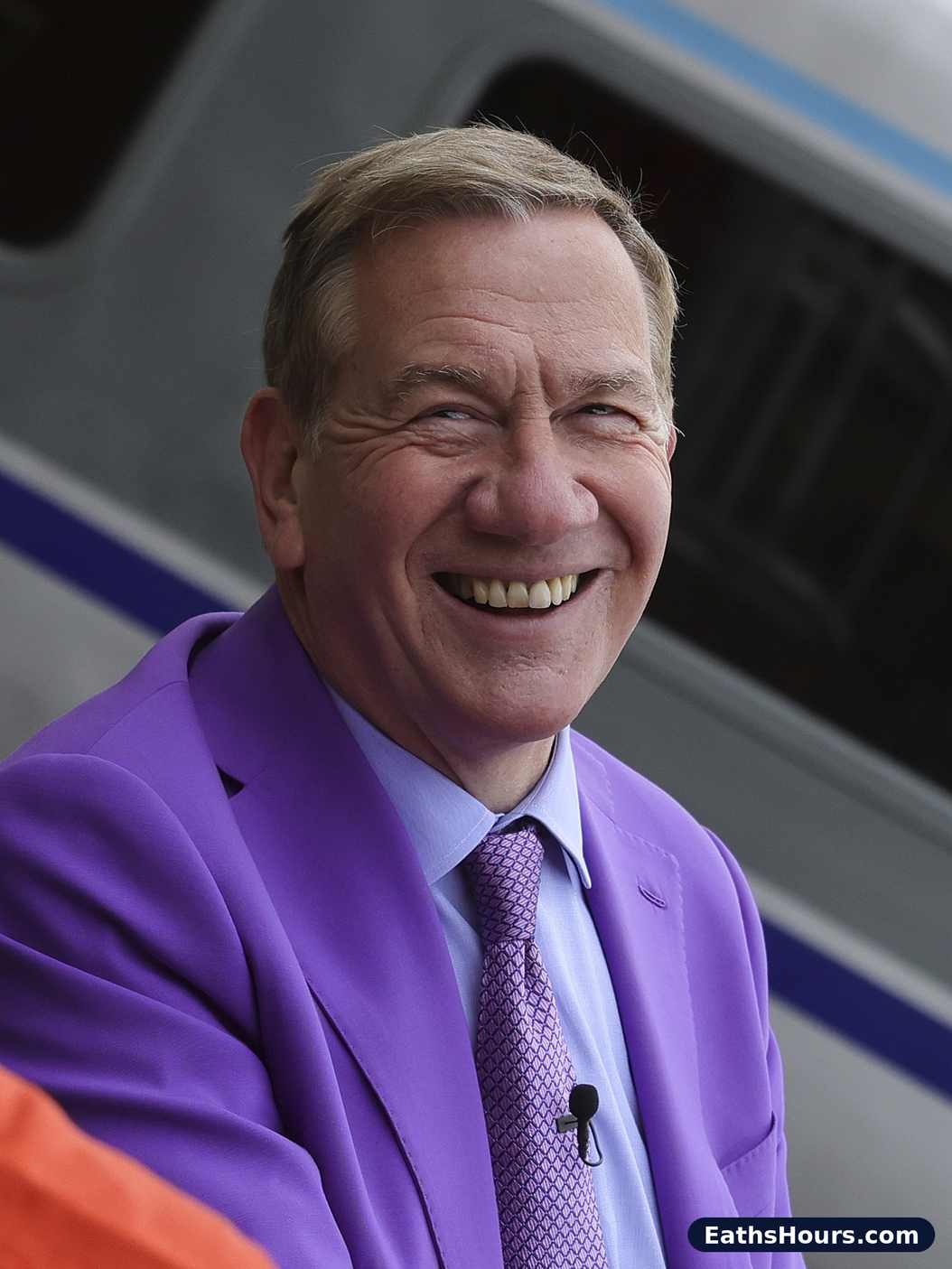
Michael Portillo: Biography
The guide opens with a five-row biography table. Here it is, with a third column added for what the checks found:
| Attribute | The guide’s claim | What the checks found |
|---|---|---|
| Full Name | Michael Denzil Xavier Portillo | Confirmed — the full name in every reference record |
| Born | May 26, 1953 | Confirmed — 26 May 1953, in Bushey, Hertfordshire, England (the guide gives the date but never the place) |
| Nationality | British | Confirmed, and incomplete: he holds British and Spanish citizenship — he was registered as a Spanish citizen at the age of four, the son of an exiled Spanish republican father |
| Profession | Politician, TV Presenter, Author | Confirmed in substance: MP 1984–1997 and 1999–2005, Cabinet minister, broadcaster from 1998, author of four published books. The record adds journalist and columnist |
| Net Worth | Estimated at $5 million (2023) | Unverifiable. No figure for Portillo exists in any primary or authoritative source checked. The estimate sites that publish numbers for him give £2.5 million, £5–8 million, £7–11 million, £8–10 million, £10 million, €8.2 million and $5 million — a spread of more than four to one in sterling terms, none with a disclosed document beneath it |
| The Verdict | — | A real, exceptionally well-documented public figure wearing an undocumented fortune: the biography in the profile is checkable almost cell by cell; the $5 million is one claim among many, printed in dollars for a man whose entire career was paid in pounds |

The Checks: Identity, Career Record and the Missing Paper Trail
Fifty-two topics in this run passed through these tests ahead of this one — among them the string behind xucvihkds, the phrase behind why kiolopobgofit important and the device behind g15tools com gadget, none of which survived examination. Portillo inverts the usual result: here the man is documented almost to excess, and it is the fortune that vanishes under examination.
- The identity. There is no ambiguity to resolve. Every cell of the guide’s table converges on one man: Michael Denzil Xavier Portillo (born 26 May 1953, Bushey, Hertfordshire), Peterhouse, Cambridge, first-class history degree; Conservative MP for Enfield Southgate from December 1984 and for Kensington and Chelsea from November 1999; Chief Secretary to the Treasury, Secretary of State for Employment, then Secretary of State for Defence under John Major; presenter of Great British Railway Journeys since 2010; married to Carolyn Claire Eadie since 1982. Each of those facts stands independently in the reference record. Everything after this point concerns the money alone.
- The career record. Each load-bearing assertion was tested against that record in sequence: the 1984 by-election entry; the junior posts under Margaret Thatcher (Social Security, then Transport — where he counts saving the Settle–Carlisle railway as his proudest achievement — then Local Government); the Cabinet ladder from 1992; the 1997 defeat that gave British politics the phrase “Portillo moment”; the 1999 return; the Shadow Chancellorship (2000–2001); the 2001 leadership bid, in which he led the first ballot and was eliminated in the final MPs’ round; retirement at the 2005 election; the BAE Systems and Kerr-McGee board seats that followed; and the broadcasting second career, from Portillo’s Progress in 1998 to sixteen series of Great British Railway Journeys by May 2025 and a GB News show from 2022. Each of those waypoints survives contact with the record.
- The documents that would settle it do not exist. A personal fortune becomes verifiable only when at least one hard document exists underneath it: a rich list’s worked profile, a public filing, accounts published for a company the person owns, or the person’s own disclosure. For Portillo, every one of those categories came back empty in any record checked. No Forbes profile or figure for him was found; no entry in any rich list was found; Celebrity Net Worth — the estimate industry’s usual anchor — returned no entry for him in the draft-time searches, which instead surfaced the copy sites censused below. His parliamentary and ministerial pay was public-service pay set by published scales, but no document totals what he received across nineteen years, and the amount of the parliamentary pension he is entitled to has never been published. His television fees have never been published either: the one presenter-fee range in circulation is a generic industry rate that a single estimate site applies to him as an assumption, labelled as such in the census below. No surviving document would let anyone calculate a Portillo fortune; each circulating number was manufactured in that document’s absence.
- The copies. In place of documents, an estimate ecosystem circulates — and on this name it cannot even agree on a currency. The claims run from £2.5 million to £11 million in sterling, with the same £8–10 million band also reprinted as “$8–10 million” by one site — a conversion that was never performed — and as “€8.2 million ($9 million)” by another. None of the sites checked names a filing, an account, a payslip or a valuation beneath its number. One of them, to its credit, shows its working: it builds £7–11 million from a pension pot, assumed per-episode presenter fees and property, and states plainly that the result “is an estimate, not a public declaration” and that the subject’s private investments and liabilities cannot be known. That site is the exception. The rest print a band, attribute it to nobody, and move on — and the guide’s $5 million sits inside that ecosystem as its joint-lowest claim, not as a measurement.
- The guide’s tells. In the guide’s introduction, the keyword phrase doubles as a hyperlink out to idobusiness.co.uk, a site with no relation to the subject — the injected-anchor fingerprint documented again and again across this competitor’s pages; the anchor is noted here and never carried over. After its “How Much” section the page inserts a “Read more” cross-promo pointing to its Matt Kaplan net-worth guide, stamps itself 12 August 2025 in a closing details block, illustrates the presenter with two genuine coverage portraits of him, and — strangest of all — prints its own FAQ twice, the second block recycling three of its five questions after the Conclusion. None of that apparatus amounts to sourcing; it is the machinery of the profile ecosystem at work, and the duplicated block is dealt with in the structure notes of this draft’s publishing block.
Michael Portillo Net Worth: Sources of Income
The guide shapes Portillo’s money as four income streams. The streams are real as categories of work; what follows tests each one against the record, because a stream of work is not a sum of money until a document prices it — and on this name, no document prices any of them.
Politics and Public Service
The documented ladder is set out in full in the career section below: junior minister from 1987, Cabinet from 1992, Defence Secretary from 1995 to 1997, then — after the 1997 defeat and the 1999 return — Shadow Chancellor, a front-bench post that carries no government salary at all. Two corrections to the guide’s framing belong here. First, the peak was real but finite: he held Cabinet office for five of his nineteen parliamentary years, not throughout them. Second, the pay itself: MPs’ and ministers’ salaries are public-service pay, set and published as scales — but a scale is not a total. What Portillo actually received across two spells in Parliament, what he drew, saved, spent or paid in tax, and what his parliamentary pension is worth, appear in no document available to the checks. The guide calls the salary “substantial”, which the scales support as a description of the offices; as a component of a net-worth figure it remains unpriced. His years as a government adviser and at Kerr-McGee before Parliament, and the directorships after it, are likewise documented as posts and nowhere documented as pay.
Television Career
This is the stream the record supports most strongly as work, and prices least. The railway franchise alone is substantial by any count: Great British Railway Journeys filmed in 2009 and broadcast from January 2010, sixteen series by May 2025, with sibling series for continental Europe (eight series), America, India, Australia, Asia, Alaska, Canada, the coast and Japan and Korea in 2026 — alongside This Week from 2003 to 2019, Channel 5 history series, a Times Radio programme and his own GB News show from October 2022. A presenter who has fronted that volume of factual television for a quarter of a century has plainly been well paid for it. What he has been paid is another matter: no fee, salary or contract value for Portillo appears in any record checked. The single number in circulation — a range of £5,000 to £15,000 per episode — is not his fee; it is one estimate site’s stated assumption about what “top-tier presenters” of such programmes “can command”, applied to him as an input to its own estimate. The guide’s statement that television earnings contributed significantly is a fair inference from the sheer volume of work. An inference is all it is, and this article leaves it labelled as one.
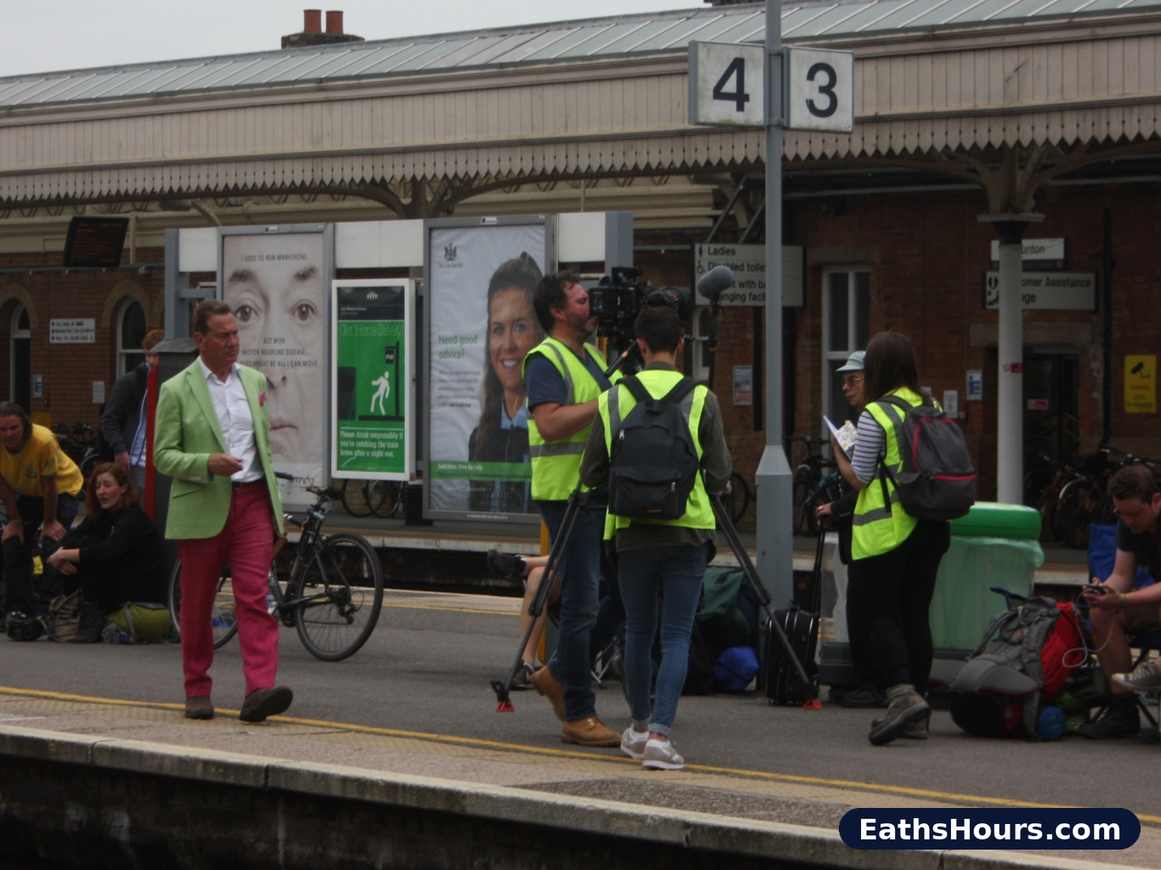
Author and Speaker
The author half of this heading checks out precisely. Four books stand in the published record under his name: Great Continental Railway Journeys (2015), Great American Railroad Journeys (2017), Portillo’s Hidden History of Britain (2018) and Greatest British Railway Journeys (2020) — alongside a long-running Sunday Times column and other journalism. The speaker half is where the record thins. Portillo is listed by speakers’ bureaus, and one estimate site cites his bureau listing to place his speaking fee in a £5,000–£10,000 bracket — a bureau’s advertised bracket for booking him, quoted here as exactly that: a listing, not a record of fees received, engagements performed or income earned. The guide’s claim that he “commands high fees” may well be true of a former Defence Secretary with his television profile; no document checked prices a single engagement. Book royalties, column fees and speaking income are all real categories in his working life, and all three are unpriced in every record the checks could reach.
Investments
This is the guide’s weakest heading, and it is kept — as the headings rule requires — so that its weakness can be shown rather than hidden. The guide asserts that Portillo has made “smart investments” across his life and credits his “financial acumen” with a hand in growing the total. No source is named for either assertion, and the checks found nothing behind them: no shareholding, portfolio, property transaction or investment of Portillo’s appears in any record examined. What the record does hold is two board seats — non-executive director of BAE Systems from 2002 to 2006, and a few months on the board of the Kerr-McGee Corporation in 2006. A directorship is employment, not an investment; the fees for those seats were never published in any record checked, and a seat on a defence company’s board is not evidence of a personal portfolio. One property fact is documented — he has a home in Carmona, in Andalusia — and no value for it appears anywhere in the record. What this heading can truthfully hold is therefore brief: the investments are claimed by the guide, evidenced by nothing, and priced by nobody.
How Much Is Michael Portillo Worth?
The guide answers with a single figure — about $5 million, dated to 2023 — and then repeats that figure in its biography table, its first FAQ block, its duplicated FAQ block and its Conclusion. Held under the guide’s own heading, the question can now receive its honest answer.
For Michael Portillo, no verified net worth exists — not for 2023, and not for any other year. What exists is a set of claims, and what this heading can honestly contain is the census itself, tabled below. Every figure the checks found in circulation is tabled here with its claimant attached:
| Claimant | Figure printed | Standing |
|---|---|---|
| The guide (ukrtime), 2025 page, figure dated 2023 | $5 million | No source or method disclosed |
| The Bulletin Time, as repeated by Nairobi News | $5 million | Attributed onward to another estimate page; no document |
| Unifresher | £2 million to £3 million, midpoint £2.5 million | No source or method disclosed |
| CelebsWiki | £2.5 million (about $3.1 million) | No source or method disclosed; supports it with a generic “top BBC presenters” pay range, not his fee |
| Congress.net | £5 million to £8 million | Its own text concedes precise figures are not publicly disclosed |
| UK Blogspot “data-backed estimate” | £7 million to £11 million | The one claimant that shows a method — pension pot, assumed episode fees, property — and states plainly that the result is an estimate, not a declaration, and that his private investments and liabilities cannot be known |
| Pogeo | £8 million to £10 million (2026) | No document disclosed; “analysts suggesting” is its only attribution |
| Naction | £8–10 million ($10–12.5 million) | No source disclosed; salary cell reads “yet to be updated” |
| Sada Magazine | £8–10 million, rendered in the same passage as “$8–10 million” | No source disclosed; the sterling band reprinted in dollars without conversion |
| Digital Journal USA | £8 million to £10 million | No source or method disclosed |
| Journal Magazine | £8–10 million (about $10–12 million), 2025 | No source or method disclosed |
| Wordify | £10 million | No source disclosed; calls the estimate “widely cited”, which is the ecosystem describing itself |
| FamousIntel | €8.2 million ($9 million) | No source or method disclosed |
| Trendara | About $8 million | No source or method disclosed |
Read as a whole, the census is the finding. In sterling the claims run from £2.5 million to £11 million — the highest is more than four times the lowest — for a man whose political career closed twenty years ago and whose television workload anyone can look up. A quantity that measurers place that far apart has, in truth, not been measured at all. The currency drift makes the identical point by another route: figures migrate between sites faster than anyone converts them, so the same band appears in pounds, dollars and euros as though the symbols were decoration. And the guide’s $5 million — the figure this article’s searcher most likely arrived holding — is simply the joint-lowest number in the table, printed in a currency its subject was never paid in. It is a claim. The table above is where claims belong: attached to their claimants, and labelled as what they are.
The Documented Career: Westminster to the Railway Documentaries
What can be printed as fact about Portillo needs no estimate, because the record is rich. He was born in Bushey, Hertfordshire, on 26 May 1953, to Luis Gabriel Portillo, a Spanish republican who had fled Madrid when it fell to Franco in 1939, and a Scottish mother, Cora. The railway attachment the television career later monetised began in childhood: a clockwork train set at home, and thirteen-hour steam-hauled night trains from London to his grandparents in Kirkcaldy. Educated at Harrow County School, he won a scholarship to Peterhouse, Cambridge, and took a first-class degree in history in 1975 — having arrived at Cambridge a Labour supporter and left it a Conservative under the influence of the historian Maurice Cowling.
The working life before Parliament was brief and varied: a graduate traineeship with the Ocean transport group, the Conservative Research Department from 1976, government advisory work after 1979, and Kerr-McGee Oil from 1981 to 1983. He fought Birmingham Perry Barr unsuccessfully in 1983, then won the Enfield Southgate by-election of December 1984 — held after the incumbent, Sir Anthony Berry, was killed in the Brighton hotel bombing. The ministerial ladder followed under Thatcher and then Major: Social Security, Transport, Local Government (where he defended the Community Charge), the Privy Council in 1992, and the Cabinet — Chief Secretary to the Treasury, Employment, and finally Defence, where his tenure included the 1996 sale of the Ministry of Defence’s married-quarters estate to Annington Homes. He married Carolyn Eadie in 1982; the marriage stands in the record throughout both careers, and the guide’s table never mentions it.
The 1997 general election made him a byword. His defeat by Labour’s Stephen Twigg in the seat he had held for thirteen years — a swing of 17.4 per cent — became the emblem of that landslide: “the Portillo moment”, and the election-night question “Were you up for Portillo?” He returned in the Kensington and Chelsea by-election of November 1999, became Shadow Chancellor in February 2000, and contested the party leadership in 2001, leading the first ballot of MPs before elimination in the final parliamentary round. He declined a shadow post in 2003 and left the Commons at the 2005 election; his party membership has since lapsed. The board seats at BAE Systems (2002–2006) and Kerr-McGee (2006) belong to this interval — documented posts, unpriced in the record, and the closest the documented life comes to the guide’s “investments”.
The second career needs no embellishment either. Broadcasting began while he was still an MP — Portillo’s Progress in 1998 — and widened after 2005: This Week, The Moral Maze, documentaries on subjects from Nelson to capital punishment, and then the railway format that defines him publicly. Filmed in 2009 with George Bradshaw’s 1863 handbook in hand, Great British Railway Journeys turned a former minister’s private enthusiasm into one of the BBC’s most durable factual franchises, spawning continental, American, Indian, Australian, Asian, coastal and — in 2026 — Japanese, Korean and Central Asian editions, plus his Channel 5 history series, his GB News programme from 2022, and the four books censused above. It is, by any documented measure, a remarkable second act. What it has paid him is the one thing about it that has never been published.
FAQs About Michael Portillo Net Worth
1. What is Michael Portillo’s current net worth?
A: There is no verified figure — not for the current year, and not for any other. The circulating claims run from £2.5 million to £11 million — the guide’s $5 million is the joint-lowest of them — and not one of them names the document it rests on. Nothing authoritative documents what he is worth.
2. How did Michael Portillo make his money?
A: Through work whose record is fully documented and whose pay is not: nineteen years as an MP including five in the Cabinet, two corporate directorships, a quarter-century of broadcasting fronted by the railway documentaries since 2010, four books, journalism and listed speaking work. Not one of those posts has ever had its pay published.
3. What is Michael Portillo’s main source of income?
A: Today, broadcasting — the guide’s answer stands as far as it goes. He remains an active presenter (railway series, Channel 5 history programmes, a GB News show), and television is plainly his principal current work. No fee for any of it has ever been disclosed, so “main source” describes his workload, not a priced income.
4. Did Michael Portillo inherit his wealth?
A: No inheritance appears anywhere in the documented record, and the one large sum in his family’s documented history points the other way: his maternal grandfather, a prosperous Kirkcaldy linen manufacturer, left his art collection — worth millions — to the Kirkcaldy Galleries, not to his grandson. The guide’s “no evidence” answer stands; nothing checked adds any.
5. What are some of Michael Portillo’s most famous TV shows?
A: The railway documentaries above all: Great British Railway Journeys (from 2010, sixteen series by 2025) and its continental and worldwide editions — the guide’s answer, completed. Add This Week (2003–2019), Portillo’s Hidden History of Britain (2018) and his GB News programme Portillo (from 2022).
What Cannot Be Verified
The blanks on this name are worth gathering in one place, because they are the article’s real subject. No net-worth figure from any authoritative source exists. No presenter fee, book royalty, column fee or speaking fee he has actually received appears in any record checked. The amount of his parliamentary pension is unpublished, as is any total of his parliamentary and ministerial earnings. His two directorships are documented as posts and unpriced as income. His investments — the guide’s fourth income stream — are evidenced by nothing at all: no holding, transaction or portfolio in any record examined, and the one documented property fact, a home in Carmona in Andalusia, carries no value anywhere. His tax, spending, savings and liabilities are, like any private citizen’s, his own. Anyone who encounters one of these items presented as a number, on any page, is listening to the estimate ecosystem converse with itself.
How to Check a Net Worth Claim
The Portillo file is a template, since the machinery behind his figures also manufactures most public-figure fortunes online. Five checks follow, sequenced as this article performed them:
- Trace the number back to whoever printed it first, and inspect what they stood on. A fortune figure inherits the strength of the document underneath it — a filing, a rich list’s stated method, the subject’s own words. Where the earliest version rests on none of those, later repetition adds nothing; it only adds echoes.
- Lay every version side by side instead of splitting the difference. When a dozen pages price one man anywhere between £2.5 million and £11 million, the disagreement is the datum: it demonstrates that nobody in the chain possessed the underlying document.
- Watch the money’s unit as it travels. A band copied from pounds into dollars and then into euros without the arithmetic being done has been transcribed, not researched — and a claim careless with its own currency has not been near a primary source.
- Test whatever can actually be opened. A claim that can be loaded and examined — the way classroom 15x could be opened and worked through feature by feature — earns belief by surviving contact. A private fortune offers nothing to open; where that is the position, the truthful verdict is “not publicly documented”, never a number borrowed from a neighbour page.
- Pin each figure to its year, and discount any that floats free of one. Copies shed their dates as they spread: a figure labelled 2023 inside a page published in 2025 is now quoted as today’s measurement. The year travelled; the evidence never existed to travel with it.
Conclusion
Michael Portillo is a real public figure with a checkable, remarkable double career: Cambridge first to Cabinet office in seventeen years, the most famous constituency defeat of the 1997 landslide, a return, a leadership bid — and then a second life as the presenter who turned a Victorian railway handbook into a sixteen-series franchise. Each stage of that journey sits in the reference record; his wealth sits in no part of it. The guide’s $5 million is the joint-lowest figure in an estimate ecosystem pricing the same man at up to £11 million, in three currencies, with no filing, account or disclosed fee supporting any of them. This article’s verdict files every one of those figures among claims, not among counts.
The truthful residue about Portillo’s money is brief, and brevity is no defect here. He held salaried public offices whose pay scales were published and whose totals were not; he has worked continuously in broadcasting for over twenty-five years at fees that have never been disclosed; he wrote four books and sits on bureau lists as a speaker, at royalties and fees no record prices; and the Victorian handbook he carries from station to station, Bradshaw’s Guide, has outlasted every figure attached to his name — the estimates will be reprinted again next year, in some currency, and the record will still not contain the document that could settle any of them. The career is the documented thing. The fortune is the repeated one.