G15Tools Com Gadget: What the Checks Actually Found
If you searched for g15tools com gadget expecting one product to download, install or buy, here is the honest answer first: no single gadget, app or sign-up service stands behind that name today. The name does have a real history — it began with community software for a gaming keyboard — but the website using it now is a gaming blog, not a product.
That has not stopped guide after guide from describing a web-based productivity gadget with customisation features, device integration and a sign-up page. None of those guides names a maker, a version, a price or a download — and the live site itself offers none of them.
This article runs the checks — the original project’s own documentation, the domain’s archive record and the live site as it stands today — sets out which parts of the story are documented and which are invented, and explains what to do if you meet the name while hunting for keyboard software.
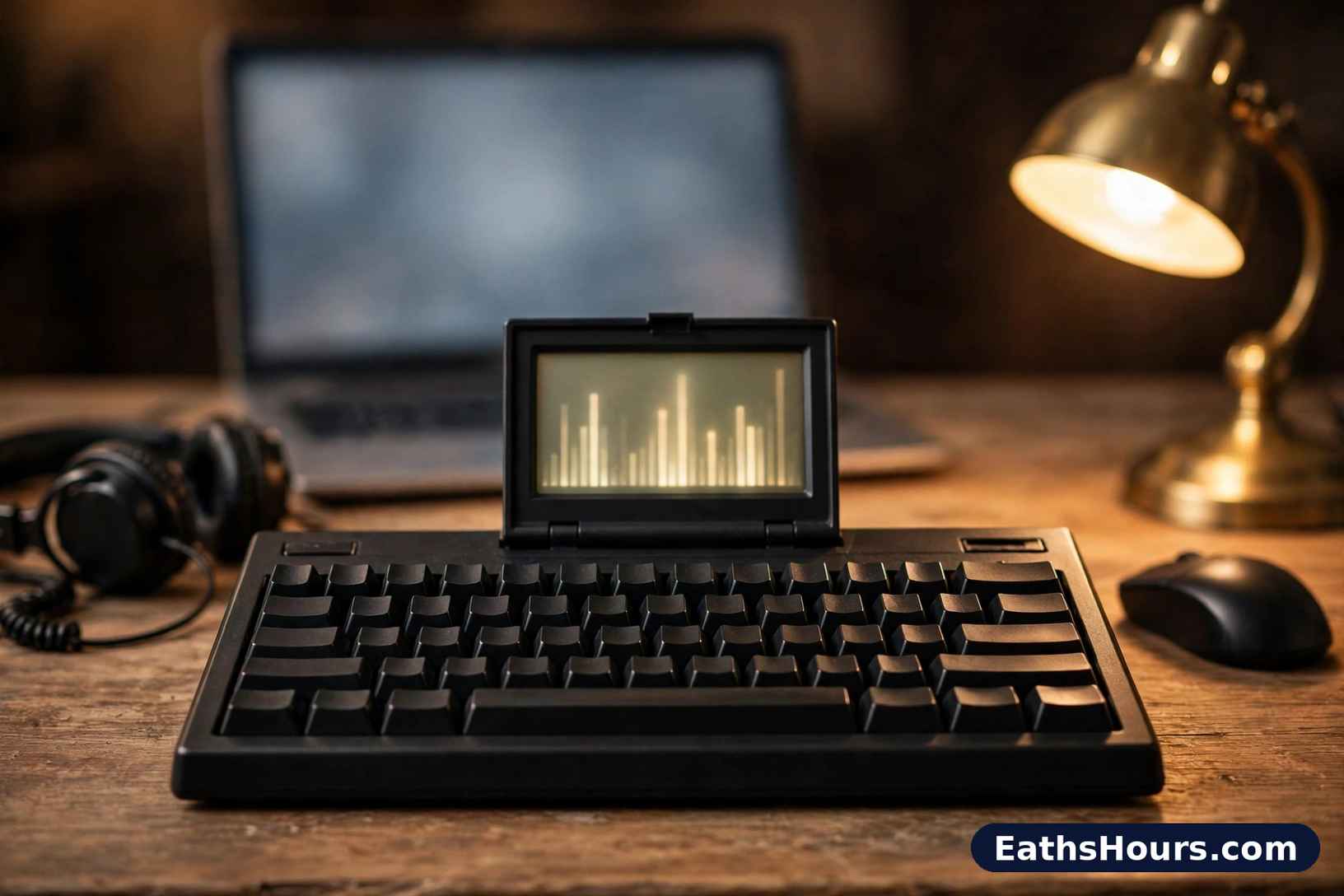
Profile Biography Table
| Field | What the Checks Found |
|---|---|
| Name | G15Tools — one name with two documented lives, not one product |
| The original project | Community open-source software for the Logitech G15 gaming keyboard — the libg15 library by Philip Lawatsch and Anthony J. Mirabella of the g15tools project (g15tools.sourceforge.net), documented in the g15daemon manual |
| The keyboard | The Logitech G15, announced in August 2005: a gaming keyboard with a built-in GamePanel LCD, 18 programmable G-keys and an SDK so users could write their own LCD programs |
| The website today | g15tools.com is a WordPress blog (“G 15 Tools”) publishing gaming guides and gadget articles — no store, no download portal and no sign-up product found on it |
| Domain record | Archived since December 2007 (Wayback Machine); the blog running on it today is a later use of the domain, and any connection between the blog and the original project is unverified |
| The claimed gadget | A single web-based productivity and customisation “gadget” — described only in blog guides; no maker, version, price or download can be verified |
What is G15tools com Gadget?
The phrase is a search-term rendering of “the gadget at g15tools.com” — and that is the first problem, because the site it points to does not present any gadget. Open g15tools.com today and you get a WordPress blog called “G 15 Tools”: game guides, retro-gaming pieces and a gadgets category, all ordinary articles to read in a browser. There is nothing to install, nothing to sign up for and nothing to buy.
The only gadget-like software that has ever genuinely carried this name belongs to a different era of the same name: small programs — applets — written for the little LCD screen of the Logitech G15 keyboard, showing things like the time, system load or music playback. Those were real, and they are documented below. But they were written for a keyboard launched in 2005, not for the web platform the guides describe. The guide this article answers merges the old name, the current blog and an invented product into one “gadget” — and only the first two of those three things exist.
The Original G15Tools: A Keyboard Project, Not a Gadget Store
The documented story starts with hardware. In August 2005 Logitech announced the G15, the first keyboard in its G-series line: a gaming keyboard with a built-in auxiliary LCD display, 18 fully programmable G-keys and — the detail that matters here — a software development kit that let users write their own programs for the LCD. The 160×43 screen was meant to show game information, system data and notifications without interrupting play.
Community developers took that invitation. The g15tools project, hosted at g15tools.sourceforge.net, produced libg15, a library by Philip Lawatsch and Anthony J. Mirabella for talking to the keyboard. Mike Lampard’s g15daemon built on it, giving Linux users access to all the extra keys and the LCD — and the manual pages that still ship with Debian and FreeBSD document exactly that, naming the authors and the project. This was community-made, open-source software, never a Logitech product and never a shop. When people wrote about “G15 tools” in that era, this is what they meant: drivers, libraries and applets for a keyboard’s screen.
Key Features of G15tools com Gadget
The guide lists customisation, real-time access, integration with multiple devices and an easy interface with advanced options underneath. Tested one by one, the list falls apart — not because the words are meaningless, but because each one belongs to something else.
Customisation was real, once: G15 owners genuinely could decide what their keyboard’s LCD showed, because the keyboard shipped with an SDK and the community wrote applets for it. Real-time information was real in the same place: the LCD showed live game and system data as it changed. Integration was real too — between the keyboard, the daemon and the computer it was plugged into. What none of it describes is a website. A blog has no features to customise, nothing to integrate with your devices and no interface beyond its pages. The feature list is the old keyboard ecosystem’s genuine qualities, re-labelled as a web product that nobody has ever shipped.
What Stands Behind the Name Today: The Checks
Three checks separate the documented parts of this story from the invented one, and all three were run for this article in November 2026.
First, the live site. g15tools.com loads as a WordPress blog titled “G 15 Tools”. Its homepage is game content — guides for titles like Minecraft, GTA, Zelda and Roblox, retro-gaming articles and an “I Love Gadgets” category. There is no store, no prices, no checkout, no software download portal and no account sign-up anywhere on it. Tellingly, the blog’s own gadget category describes “the www g15tools gadget” in the same circular words the guides use — managing device tasks, downloads, conversions, system checks — without ever showing the thing itself. The site never defines a product because, as far as its pages show, there isn’t one.

Second, the archive. The Wayback Machine’s index shows g15tools.com captured since December 2007, through the years when the keyboard project was active; the mid-2010s captures are redirects and errors, and the blog visible today is a later use of the domain. Nothing in the record connects today’s blog to Lawatsch, Mirabella or the old project — the domain is old, but an old domain is evidence of age, not of continuity.
Third, the product test. A real gadget leaves the trail every real product leaves: a maker’s name, an app-store or repository listing, a support page, a version history. For a “G15Tools gadget” as the guides describe it — a web-based productivity platform — none of those exists. There is no company behind it, no listing to download it from and no support page to ask. What stands behind the name today is a blog; what stood behind it originally was a keyboard project. The unified gadget is the part the guides added themselves.
Why is G15tools com Gadget’s Popular?
The guide credits reliability and a wide range of uses. The checkable reasons are more ordinary. The keyboard was genuinely famous in its day — the first gaming keyboard with a screen of its own — so its name still collects searches from retro-hardware hobbyists and people who owned one. The domain has existed since at least 2007 and still publishes, so search engines keep surfacing it. And the phrase itself sounds like a product, which sends a steady stream of readers to guides that promise to explain it.
None of that is the popularity of a gadget. No user-base figure for any G15Tools product can be verified, because there is no product to count users of — the popularity belongs to a search term and a long-lived name, not to a tool people use.
Benefits of Using G15tools com Gadget’s
The guide promises faster task completion, simplified gadget management and enhanced productivity. Those benefits would require the gadget to exist. What a visitor actually gets from g15tools.com today is what any content blog offers: free articles — game guides and gadget write-ups that may help if you play the games covered, and cost nothing but time.
The one real benefit in this name’s history belongs to the old project: for G15 owners, the community software genuinely did make the keyboard more useful, putting information on its screen that Logitech’s own software of the day did not. That benefit retired with the keyboard. No productivity benefit can honestly be promised from a platform that cannot be found, opened or used.
How to Access G15tools com Gadget’s
The guide’s instructions are to visit the official site, sign up and explore its features. Two of those three steps do not exist. There is no sign-up on g15tools.com — it is a public blog, and accessing it means exactly what accessing any blog means: open the address and read. There is also no account, dashboard or feature set waiting behind a login, because there is no product behind the name.
If a page elsewhere offers you a “G15Tools” download or asks you to register for the gadget, treat it as a page to close. Files attributed to the old keyboard project survive only on mirrors, forums and file-sharing pages — the original platform is gone or archive-only — and a download with no official source behind it is precisely the kind that deserves suspicion.
Tips for Maximizing G15tools com’s Gadget
Maximising a thing that cannot be found is impossible, so here is the useful version of these tips, split by what you actually came for.

If you came for the website: use it as the blog it is. Its categories and search will take you to the guide for the game or gadget you are reading about, and that is the whole of what it offers — no account or setup will unlock more. If you came for the keyboard: the old applets belong to discontinued hardware, and the supported route for a current gaming keyboard is the maker’s own current software — Logitech points its users to G HUB today — alongside the performance overlays built into modern games and graphics drivers. Those do, with a named maker behind them, the job the little LCD applets once did.
Future of G15tools com Gadget’s
The guide forecasts expanded features, smarter tools and a smoother experience. Forecasts need an owner, and this name has none that can be named. The original project has been inactive for years — its documentation survives in operating-system manual pages, which is where finished community software ends up. The blog’s future is simply whatever its operators publish next; it has announced no product, no roadmap and no gadget.
If a real product ever does launch under this name, it will arrive the way real products do — with a maker, a listing and a version number — and this article’s verdict can be revised then. Nothing of the kind exists yet.
How to Check a Gadget Name Before You Trust It
The useful skill here is not about this one name; it is the habit of checking the next confident gadget guide that lands in front of you:
- Find the maker. A real product has a named company or developer standing behind it, reachable somewhere other than articles about the product.
- Go to the primary source. The maker’s own page, an app-store listing or a software repository — not blogs describing what the maker’s page supposedly says.
- Check the domain’s history. Archive records show whether a name is continuous or has been picked up and reused for something else.
- Apply the definition test. Independent sources describe a genuine thing the same way; invented ones drift, because each writer is guessing.
- Follow the money. If every path from the guide leads to a download, a sign-up or a “premium” tier with no maker behind any of it, treat every claim as marketing.
That caution cuts both ways, and unfamiliar names are worth checking rather than dismissing outright — the same habit of verifying a claim before repeating it is what EathsHours applied to the unblocked-games portals behind classroom x15, which turned out to be real sites that exist and can be inspected. The contrast is the lesson: a real thing survives checking, and part of this story — the keyboard project — genuinely does. The invented gadget is the part that doesn’t.
A Real Gadget vs a Guide’s Gadget: How to Tell the Difference
A real gadget can be recognised by the same kind of trail every time. It has a maker whose name and contact details are published. It has a model or version you can state. Its specifications stay the same from source to source, because everyone is describing the same object. It has a support route, and a price that agrees within a normal range wherever it is sold.
Hold the three claimants to this name up against that list. The original g15tools project passes the tests that apply to software of its kind — named authors, a documented library, a home page, manuals that still cite it. Today’s g15tools.com is real as a blog: it loads, it publishes, it can be inspected. The guide’s unified gadget fails every test at once — no maker, no version, no specifications, no support, no price. When a name contains both a documented past and an invented present, the honest answer names both, rather than letting the invented half borrow the real half’s credibility.
Conclusion
After all the checks, g15tools com gadget is not a product you can get — it is a name with a documented past and a busy present. In the past stands a real community project: libraries and applets for the Logitech G15 keyboard’s LCD, written by named developers and still cited in system manuals. In the present stands a WordPress blog publishing gaming guides under the same domain. The single web-based gadget of the guides — with its features, tiers and sign-up page — stands nowhere at all.
If the keyboard is what you were really hunting, start from the hardware, which can be checked like any real product: the Logitech G15 was a documented device with a known maker, contemporary reviews and a screen the community genuinely built on. Let every gadget name earn your trust the same way this one’s real half did — by surviving the checks, not by being described confidently.
FAQs about G15tools com Gadget
Q1: What is G15tools com gadget mainly used for?
There is no single product to use: today the name points to a gaming blog, and historically to community software for the Logitech G15 keyboard’s LCD. The productivity use described in guides is documented nowhere.
Q2: Is G15tools com gadget’s free to use?
The blog is free to read and the old keyboard software was free community software. No paid or premium tier of any “gadget” could be found — there is no product behind the name to charge for.
Q3: Can G15tools com gadget’s be used on mobile devices?
The website opens on a phone like any blog. Beyond that, the checks found no G15Tools app or mobile product under this name — the original software ran on a computer, for a keyboard.
Q4: Who can benefit from G15tools com gadget’s?
Readers of the site’s game guides, and retro-hardware fans interested in the documented G15 project. Nobody can benefit from the all-in-one gadget the guides describe, because it cannot be found.
Q5: Is G15tools com gadget’s safe?
Reading the blog is ordinary web browsing. The risk sits in downloads: files claiming to be G15Tools software circulate on mirrors with no official source, so treat them as unverified and scan anything before running it.