Scott Farmer Net Worth: The Filings Behind the Fortune
Most people who search scott farmer net worth meet the same headline within seconds: $16.4 billion, the fortune the guide under review assigns to the Cintas chairman. Unusually for this corner of the internet, the man is real, the company is real, and a public paper trail genuinely exists — which makes this the rare profile whose central number can be audited against filings instead of merely doubted.
The audit is not kind to the headline. The guide builds its figure from 75.3 million Cintas shares, but the company’s 2026 proxy statement, filed with the Securities and Exchange Commission, reports that Scott D. Farmer holds sole voting and dispositive power over 56,043,772 shares — 14.0 per cent of the company. Priced at the guide’s own $217 a share, the documented stake comes to roughly $12.2 billion, some $4.2 billion short of the number being copied around the web.
The pages that follow keep the guide’s sections standing in their original order and grade each assertion against the record: the proxy statement, the insider filings, the company’s own releases and the university’s account of the family name. Where the guide is right, this article says so. Where its inputs fail, the failure is shown alongside the document that exposes it.
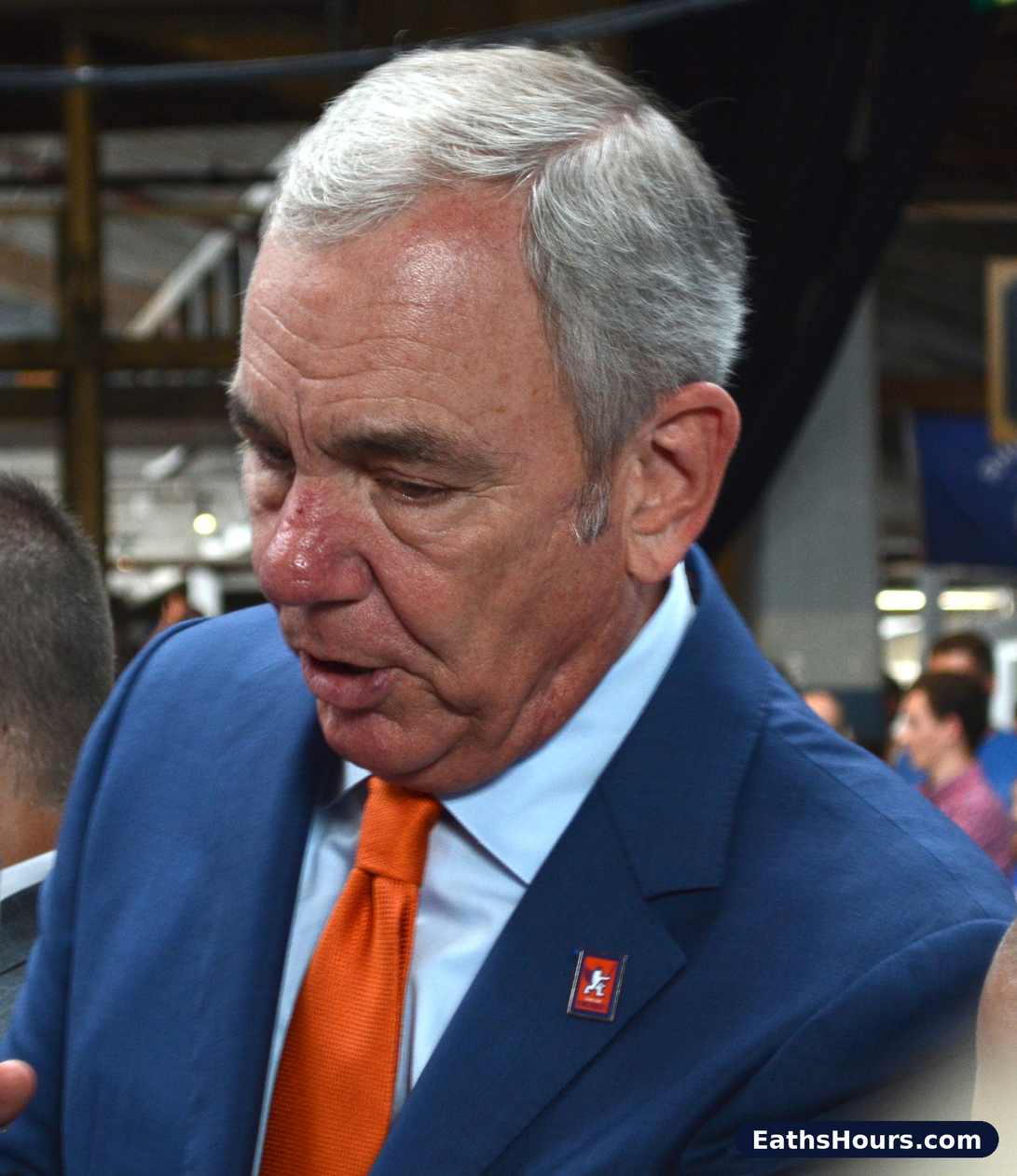
Scott Farmer Biography Table
The guide’s opening move is an eight-row biography table, reproduced here with a third column carrying the checks:
| Attribute | The guide’s claim | What the checks found |
|---|---|---|
| Full Name | Scott D. Farmer | Confirmed — the name exactly as it stands in the SEC filings and in the company’s 2026 proxy statement |
| Date of Birth | 1959 | Confirmed as far as any primary record goes: the 2026 proxy statement gives his age as 67, which fits a 1959 birth. No exact day or month appears in any filing checked — the precise birthdays printed elsewhere belong to a different, invented man (see the census below) |
| Place of Birth | United States | Too vague to grade as true and too vague to use: no primary record checked names a birthplace. One copy supplies “Dallas, Texas” — for the fabricated namesake, not for this man |
| Education | Miami University (Bachelor’s in Economics) | The university is confirmed — Miami University in Oxford, Ohio; the university’s foundation lists him among its trustees as Scott Farmer ’81, and Cintas releases call him a Miami graduate who joined the company in 1981. The degree subject could not be verified: the guide says economics, a copy says business and marketing, and no primary source checked states it |
| Occupation | Business Executive, Former CEO of Cintas Corporation | Confirmed and out of date: chief executive from July 2003 to May 2021 — and Executive Chairman of the board today, a current office the cell omits |
| Known For | Executive Leadership at Cintas, Billionaire Status | The leadership is documented across four decades of filings. The billionaire status is real in scale — the documented stake is worth eleven to thirteen billion dollars at recent prices — but every exact size printed for it is a claim, graded in the census below |
| Estimated Net Worth | $16.4 Billion (as of 2025) | Unsupported as computed. The figure is 75.3 million shares multiplied by about $217. No filing contains that share count: the 2026 proxy statement reports 56,043,772 shares (14.0 per cent). At the guide’s own price, the documented count is worth roughly $12.2 billion — and even that is a stake value at a stated price, not a measured net worth |
| Family | Son of Richard T. “Doc” Farmer, Founder of Cintas | Two men merged into one. His father is Richard T. “Dick” Farmer — Miami class of 1956, founder in 1968 of the company that became Cintas, died 2021. “Doc” was his great-grandfather Richard Farmer, who founded the family’s Acme Industrial Laundry in 1929 |
| The Verdict | — | A documented man holding a documented stake, priced by the guide from a share count that exists nowhere in the record. The identity, the career and the size of the holding all survive checking; the headline built on top of them does not |
The Checks: Identity, the Filing Record and the Phantom Share Count
Earlier topics in this run were put through the same examination — among them the string behind xucvihkds, the phrase behind why kiolopobgofit important and the device behind g15tools com gadget, none of which survived it. This topic inverts the usual result in an instructive way: here the paper trail is genuine and unusually complete, and what collapses is a single input — the share count — on which the guide’s entire fortune is built.
- The identity. There is exactly one Scott D. Farmer in the corporate record, and the guide means him: Scott D. Farmer of Cincinnati, Cintas employee since 1981, director since 1994, chief executive 2003–2021, Executive Chairman since 2021, reporting person CIK 0001189287 in the SEC’s insider database. Two fences are worth building anyway. Searches for this name also surface Curtis C. Farmer, the Comerica chairman, a different executive whose own estimate pages price him in the tens of millions — not this man, and nothing in this article concerns him. And one copy site profiles a “Scott D. Farmer” who founded a technology company in 2005 and a real-estate firm, born on a precise date in Dallas: no such companies, and no such person, appear in any record checked. That page is censused below as what it is — a biography assembled for a man who does not exist, wearing a real man’s name.
- The documents that settle the share count exist. A fortune like this one leaves a specific paper trail, because American insiders must report what they hold. Three layers of it were opened. The definitive proxy statement Cintas filed on 15 September 2026 carries a beneficial-ownership table dated 31 August 2026: Scott D. Farmer, 56,043,772 shares, 14.0 per cent of the class, with a footnote itemising where the shares sit. His insider filings (Forms 4 and 5) run continuously through 2025 and 2026. And the Schedule 13D amendments from the previous decade show the same holding at its earlier size, which is what allows the guide’s number to be traced — see the next bullet. On this name, uniquely in this run’s net-worth family, the question “how many shares?” has a filed answer.
- The phantom count. The guide’s 75.3 million shares appear in no filing at any date checked. The nearest documented ancestor is the Schedule 13D count of October 2014: 18,897,192 shares, 16.2 per cent of the company — stated before the four-for-one stock split of September 2024, which mechanically quadrupled every holding on paper. Restated after that split, the 2014 count reads as roughly 75.6 million shares: the guide’s figure, give or take rounding, is a twelve-year-old holding wearing a 2025 price. Since 2014 the reported stake has genuinely shrunk — to 14.0 per cent and 56,043,772 shares by August 2026 — through the distributions, gifts and dispositions that a decade of insider filings records. A stale input, not an invented man, is the flaw at the centre of this profile.
- The copies. The figure’s family is small and traceable. The guide prints $16.4 billion from its 75.3 million shares. A copy at newssow.com prints a range of $14.5 to $16 billion from the same copied share count, attributes the lower figure to Forbes — an attribution the checks could not verify, since no Forbes figure for Scott Farmer was retrievable from any record the drafting environment could reach, and the Forbes 400 appearances the record does contain are his father’s, Richard T. Farmer’s, in 2005 and 2007 — and then contradicts itself inside its own page furniture, where its description text prices the same man at “about $4.6 billion+”. The cinenetworth.com page prices its invented Farmer at $50 million in one passage and $500 million in another. Between them, the copies offer four incompatible fortunes for one name, and only one of the four is even about the right person.
- The guide’s tells. The introduction wires its keyword phrase to idobusiness.co.uk — an unconnected site carrying its own Scott D Farmer profile — the injected-anchor fingerprint this competitor leaves on page after page; it is flagged here and not reproduced. After its conclusion, the page bolts on a “Read more” cross-promo for an unrelated rapper’s net-worth guide. Its hosted photographs were viewed: two are crops of one Cintas corporate portrait of the subject, genuine but the company’s own publicity material; the third shows an older man at a brass railing whom the checks could not confirm as Scott Farmer rather than his father — none of the three files is used here, the house set having been sourced independently from Wikimedia Commons. None of that apparatus counts as sourcing; it is profile-ecosystem machinery, and on this page it surrounds a number whose one checkable input is twelve years out of date.
The Source of Scott Farmer Net Worth
The guide’s central claim — that the fortune derives from Cintas equity accumulated across a career that began in 1981 — is correct, and it is the strongest sentence in the profile. The documented career underneath it is set out in full below. Two parts of this section do not survive. The first is its timeline: the guide has him serving “as Executive Chairman until 2022”, after which he supposedly stepped away. The filings say otherwise, in his own signature: the letter opening the September 2026 proxy statement is signed “Scott D. Farmer, Executive Chairman of the Board”, the same document lists him as a director nominee and an executive officer, and his insider filing of August 2026 carries the officer title Executive Chairman. He retired as chief executive on 31 May 2021. He has not retired since.
The second is what “his shares” actually means, because the proxy footnote is more honest than the profile built on it. Of the 56,043,772 shares over which he holds sole voting and dispositive power, only 87,899 sit in his own name directly — 14,667 of those pledged. The rest are held around him: 33,505,548 through Summer Hill Partners, LLLP; 15,651,200 through Summer Hill Partners II, LLC; 4,000,000 through Summer Hill Partners IV, LLC; 1,487,352 through another company under his control; 953,100 through trusts for himself and his immediate family, where he serves as trustee; 335,520 through a limited partnership; 18,304 through his spouse; and 4,849 through the employee stock ownership plan. The filing adds that he disclaims beneficial ownership of the partnership shares except to the extent of his own pecuniary interest in them. That is the fortune’s documented shape: control over a family’s pooled holding, exercised by one man — a fact about voting power first, and about personal wealth only by extension. The guide’s own vaguest sentence — that he owns “tens of millions of Cintas shares, valued at billions of dollars” — is, ironically, its most accurate one.
How Much Is Scott Farmer Net Worth in 2025?
The guide puts the figure at $16.4 billion, repeated in its biography table, its conclusion and its first FAQ answer. Beneath that heading, the question can finally be answered from the record.
No filing states a net worth for Scott Farmer, and none could: the filings count shares, and a fortune is shares multiplied by a price that changes every trading day, minus taxes and liabilities no filing discloses, plus private assets no filing lists. What the record does support is narrower and stronger than a headline — a share count, dated 31 August 2026, and the arithmetic that follows from it. The claims in circulation, each with its claimant attached, are these:
| Claimant | Figure printed | Standing |
|---|---|---|
| The guide (ukrtime), page dated 8 July 2025 | $16.4 billion “as of 2025” | Computed in the open from 75.3 million shares at about $217 — the arithmetic is internally consistent; the share count matches no filing and traces to a 2014 holding restated after the 2024 split |
| newssow.com, January 2026 | $14.5 billion to $16 billion | The same copied 75.3-million share count; attributes “more than $14.5 billion” to Forbes, an attribution the checks could not verify; the same page’s own description text says “about $4.6 billion+” |
| cinenetworth.com, July 2025 | $50 million, and $500 million in a later passage | Printed about an invented man — a “Farmer Technologies” founder and real-estate developer who appears in no record checked; neither figure concerns the Cintas chairman |
| TipRanks ownership data, read at draft time | $12,689,991,294 as the value of the holding | Not a net-worth claim: a valuation of the documented 56,043,772 shares at about $226 a share — included because it shows what the filed inputs produce |
| The documented computation (this article’s arithmetic, labelled as such) | About $12.2 billion at the guide’s $217; about $11.4 billion at $202.71 | 56,043,772 shares multiplied by two stated prices — the guide’s own, and the price recorded in his Form 4 for 10 August 2026. Stake values at stated prices, not net-worth figures |
Taken together, the census has a shape this run rarely gets to print. The copies disagree wildly — $50 million to $16.4 billion for one name — but the disagreement is not evidence that nothing is known. It is evidence that the copies never opened the filing. The man at the centre of the profile is a billionaire by any computation the documented inputs allow: a stake worth roughly eleven to thirteen billion dollars across the prices of 2025 and 2026. The guide’s error is not the claim of great wealth; it is the precision of a number built on a share count twelve years stale, which overstates the stake’s value by about a third — roughly $4.2 billion of fortune that exists only because an old holding was priced as a current one.
The Documented Record: Four Decades Inside One Company
The documented side of Scott Farmer needs no estimate at all: Cintas is a public company, and his whole career ran inside its filings. The business began in 1929, when his great-grandparents Richard “Doc” Farmer and Amelia Farmer founded the Acme Industrial Laundry in Cincinnati, collecting used rags from factories, laundering them and selling them back. Their son Hershell turned rags into shop towels and then uniforms. Hershell’s son — Scott’s father, Richard T. “Dick” Farmer, a Miami University graduate of 1956 — joined in 1957, took over in 1959, founded the Satellite Corporation in 1968, renamed it Cintas in 1972 and took it public in 1983.
Scott Farmer entered that business in 1981 as one of the first seven recruits to its new management trainee programme. The climb the proxy biography records is unglamorous and complete: vice president of the national account division, vice president of marketing and merchandising, group vice president of the rental division, chief operating officer. The company’s own forty-year timeline dates his appointment as president and chief operating officer to 1998, the year revenue passed $1 billion — the guide’s milestone list says 1997, a one-year disagreement between secondary sources on which this article follows the company’s own account. He was elected to the board in 1994, became chief executive in July 2003, and was appointed chairman of the board in September 2016 — a milestone the guide’s list omits altogether. Revenue grew from $2.69 billion in 2003 to more than $7 billion by the end of fiscal 2020 under his chief executiveship, by the company’s own retirement announcement; the largest single step was the acquisition of G&K Services, agreed in 2016 and completed in 2017 for $2.2 billion, which the guide prices correctly.
On 31 May 2021 he retired as chief executive after eighteen years, handing the role to Todd M. Schneider, and remained executive chairman — the office he had in substance held since 2016. He holds it still. The 2026 proxy statement records his fiscal 2026 pay as executive chairman at $993,044 in total, on a salary of $750,000 — company money paid for a documented office, recorded here as exactly that and never folded into the fortune. The same filing discloses the family’s one picturesque asset arrangement: Cintas holds a 25 per cent interest in a corporate aeroplane alongside an entity owned by the chairman’s family, an arrangement running since 2006 for which the company was reimbursed $4,592,003 in fiscal 2026. And the name on the business school belongs to the previous generation: Miami University’s Farmer School of Business was named for his father in 1992, after Dick and Joyce Farmer’s cornerstone gift; the family’s foundation, of which Scott Farmer is a trustee, has given since — $30 million toward the school’s building in 2005, $40 million in 2016, and a pledge of up to $100 million announced in November 2026, the largest in the university’s history.
Cintas: The Engine Behind His Wealth
The guide’s metaphor is fair: the fortune has one engine, and it is the company. What needs correcting is the size of the engine as the guide reports it. “Over $7 billion in annual revenue” was true of fiscal 2020, when revenue stood at $7.09 billion; by fiscal 2025, the year the guide was published, revenue was $10.3 billion. The guide also compresses two foundings into one sentence — Cintas did not start as a family laundry in 1929; the laundry his great-grandparents started in 1929 became, through his father’s separate 1968 company, the corporation that now bears the name. The distinction matters to this profile’s own logic, because the family’s wealth story is precisely a story of two foundings, not one.
The discipline that governs this whole article applies here in its plainest form: Cintas’s revenue, market value and Fortune 500 standing are the company’s money, and none of it is Scott Farmer’s. His connection to the engine is a single documented quantity — 14.0 per cent of its shares, held in the structure the proxy footnote describes. When the share price rises, the stake’s value rises with it, which is why every fortune figure printed for him is really a dated photograph of the stock market wearing his name. The engine is real. The photographs keep being captioned with the wrong exposure.
Major Career Milestones That Built His Net Worth
The guide lists five milestones. Each is kept below in the guide’s own words, with the record’s grade appended:
- 1997: Became President and COO of Cintas. — One year early on the company’s own timeline, which dates the appointment to 1998; the posts themselves are confirmed.
- 2003: Promoted to CEO. — Confirmed: elected chief executive in July 2003.
- 2017: Spearheaded the $2.2 billion acquisition of G&K Services. — Confirmed: agreed in 2016, completed in 2017, the company’s largest acquisition at that date, at the price the guide states.
- 2021: Retired as CEO, took role of Executive Chairman. — Confirmed, and the most consequential line in the list: the retirement was from the chief executive’s office only.
- 2022: Officially stepped down from active roles, retaining his equity stake. — Not supported by any record checked, and contradicted by the current ones. No 2022 departure appears in the filings; he signed the 2026 proxy statement as Executive Chairman, sits on its board slate, and filed insider reports under that title in August 2026.
One milestone the list omits belongs in any honest version of it: 2016, appointed chairman of the board — the year the two top offices were combined in his hands, five years before he surrendered one of them. A list that records the surrender but not the combining has the arc of the career backwards.
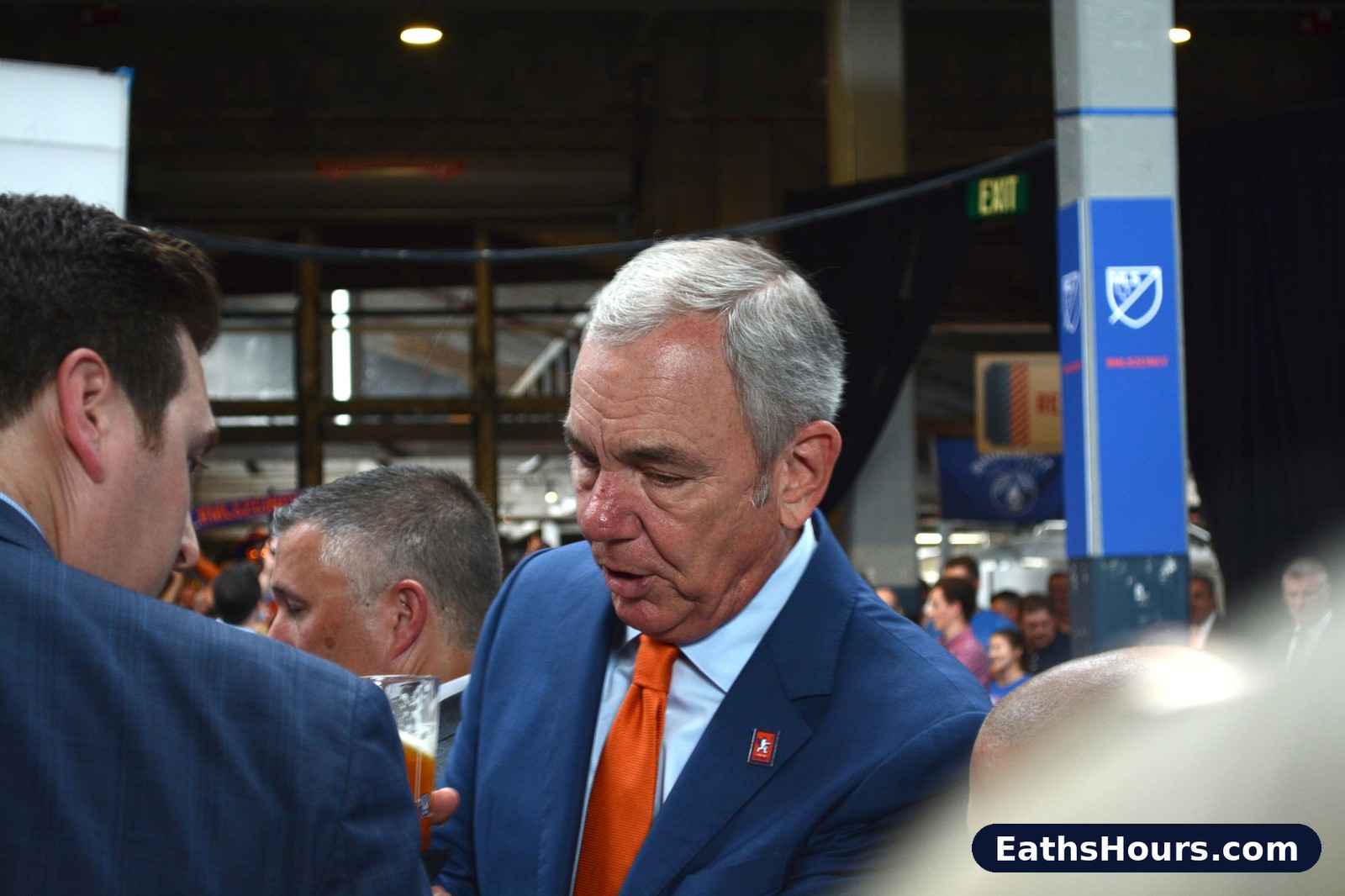
How His Net Worth Compares to Other Executives
The guide places its subject “far ahead of many Fortune 500 CEOs” while conceding he does not approach the largest technology fortunes. Comparisons inherit the flaws of the numbers fed into them, and the $16.4 billion fed into this one is overstated by about a third — so the ranking the guide builds is a ranking of a figure that does not exist. Rebuilt on the documented inputs, the honest comparison is still striking: a stake worth roughly eleven to thirteen billion dollars across recent prices exceeds the holdings of nearly every salaried executive in American business, because almost none of them owns 14 per cent of the company they run. His wealth is unusual in exactly the way the guide says — concentrated in a single company, accumulated inside one career — and that much of the section survives. What does not survive is any league table drawn from the copies, whose four incompatible figures for this one name — $50 million, $500 million, $4.6 billion, $16.4 billion — would place him in four different leagues at once.
Private Life and Philanthropy
The guide’s account here is brief and, in outline, fair: a low-profile personal life, and significant giving directed at his alma mater. The corrections are of attribution rather than substance. The Farmer School of Business is not named “after his family” in the loose sense the guide intends — it was named in 1992 for his father, Richard T. Farmer, the founder, following Dick and Joyce Farmer’s cornerstone gift. The giving since has been family giving, through the Farmer Family Foundation founded in 1988: the $30 million building gift of 2005, the $40 million gift of 2016, and the pledge of up to $100 million announced in November 2026. Scott Farmer sits among the foundation’s trustees, which makes the philanthropy partly his documented work; the amounts, however, are the foundation’s and the family’s, and this article keeps them there. His personal giving, separate from the foundation, is not itemised in any record checked — on that narrower point, the guide’s word “discreet” is one of the few in the profile the checks can simply endorse.
Investments Beyond Cintas?
The guide keeps its own question mark in this heading, and the question mark is the most honest punctuation in the profile. Its answer — that little public information indicates large-scale investments beyond Cintas — matches the record the checks could reach: no portfolio, property empire or outside venture of Scott Farmer’s appears in the filings or reference sources examined, beyond the family structures that hold the Cintas stake itself and the family’s 75 per cent interest in the corporate aeroplane the proxy discloses. Where this section fails is its supporting claim: that “he hasn’t sold significant shares since 2011”, offered as evidence of a long-term holding strategy. The filing record shows continuous movement — Forms 4 filed on 29 July 2025, 13 August 2025, 30 December 2025, 30 January 2026 and 12 August 2026; a disposition of 15,923 shares at $202.71 recorded on 10 August 2026, alongside an acquisition of 830 shares the same day; and a reported stake down from 16.2 per cent in 2014 to 14.0 per cent in 2026. Whether any single transaction deserves the word “significant” against a 56-million-share holding is a judgement — but it is a judgement the guide presents as a fact, and the fact underneath it, that the record has been quiet since 2011, is false.
What Cannot Be Verified
This name’s blanks are narrower than most in this run, and worth gathering precisely because the documented core is so solid. No document states Scott Farmer’s total net worth, and the structure of his holding means none straightforwardly could: the proxy counts shares over which he holds voting and dispositive power, then records his disclaimer of ownership in the partnership shares beyond his pecuniary interest — so the filings measure control, and any conversion of control into personal wealth involves his undisclosed share of the family partnerships, his taxes, his liabilities and his private assets, none of which appear in any record checked. His exact birth date and birthplace appear in no primary record examined. The subject of his Miami degree could not be verified against the copies’ disagreement. His personal philanthropy, apart from the family foundation’s published gifts, is unitemised. The origin of the copies’ 75.3-million share count is traced to its nearest documented ancestor, the 2014 Schedule 13D holding, but the step-by-step path it travelled to reach the guide is not recoverable. And no Forbes figure for him could be retrieved or verified at draft time, however confidently the copies borrow the name. Wherever one of these items turns up presented as settled fact, what is speaking is not a source but the copies, quoting each other.
How to Check a Net Worth Claim
The Farmer file is a useful template precisely because its subject files paperwork: the machinery that manufactures most online fortunes can be caught in the open when the documents exist. Five checks follow, in the order this article used them:
- Find the filing before the figure. For any executive of a public company, the holdings are not a matter of estimation: the proxy statement’s ownership table, the Schedule 13D and the insider Forms 4 state them, dated and signed. A fortune page that never mentions a filing has priced a person it did not look up.
- Date every input, and adjust for splits. A share count is a photograph with a date on it. This profile’s headline married a 2014 share count to a 2025 price — and a four-for-one split in between had multiplied every count on paper, so an old number, honestly copied, still produced a fortune overstated by a third.
- Redo the claimant’s arithmetic with the claimant’s own price. The guide’s multiplication was flawless: 75.3 million shares at $217 really is about $16.4 billion. The failure sat in the input, not the maths — which is why checking only the arithmetic is never enough.
- Open whatever can be opened. classroom 15x could be loaded and worked through directly, feature by feature, and every filing cited in this article can be opened the same way, free, in minutes. A claim that survives inspection earns belief; a net-worth page offering nothing to inspect is asking for faith instead.
- Distrust borrowed authority. When a copy attributes its number to a famous rich-list without linking it, the authority is decorative. The only Forbes listings the record holds for this surname are the father’s, from 2005 and 2007 — a generation out of date, like the share count.
Conclusion
Scott Farmer is that rare subject in this run: a man whose fortune rests on documents any reader can open. The career is filed — management trainee in 1981, chief executive in 2003, chairman in 2016, executive chairman still, with the G&K acquisition and a near-fourfold rise in revenue across his tenure in the company’s own releases. The holding is filed — 56,043,772 shares, 14.0 per cent of Cintas, itemised to the last 4,849 shares in an employee stock plan. And the philanthropy is filed, at family level, in the university’s own announcements. Against that record, the guide under review manages a peculiar double feat: it identifies the right man, the right company and the right source of wealth — and then prices him from a share count twelve years old, retires him four years early, and shrinks his company’s revenue by three billion dollars.
The truthful residue is not small. A stake worth roughly eleven to thirteen billion dollars at recent prices puts him among the wealthiest executives in American business without any assistance from a phantom count. What the filings actually measure is beneficial ownership — sole voting and dispositive power over the shares, held through the family’s partnerships and trusts, with ownership of much of it formally disclaimed beyond his pecuniary interest. That distinction, dry as it sounds, is the one this entire profile turns on: the documents describe control, the copies describe a fortune, and the distance between the two is where $4.2 billion of imaginary money was able to live.
FAQs About Scott Farmer Net Worth
Q1: What is Scott Farmer net worth in 2025?
A: For 2025 — as for every other year — no verified figure exists. The documented stake — 56,043,772 Cintas shares in the 2026 proxy statement — was worth about $12.2 billion at the guide’s own $217 share price, and about $11.4 billion at the $202.71 price in his August 2026 insider filing. Those are stake values at stated prices, not a measured net worth; the guide’s $16.4 billion rests on a share count no filing contains.
Q2: How many Cintas shares does Scott Farmer own?
A: The 2026 proxy statement reports 56,043,772 shares — 14.0 per cent of the company — over which he holds sole voting and dispositive power. Not 75.3 million. Only 87,899 of the shares are in his own name; the rest sit in family partnerships and companies, trusts, his spouse’s name and the employee stock plan.
Q3: Is Scott Farmer still involved in Cintas?
A: Yes — the guide’s “no” is wrong. He retired as chief executive in May 2021 and remains Executive Chairman of the board: he signed the company’s September 2026 proxy statement in that office and was paid $993,044 in total compensation for fiscal 2026.
Q4: What is the primary source of Scott Farmer net worth?
A: Equity in Cintas — the guide has this one right. The fortune is a shareholding, built inside one company across one career, and its documented size is set out in the census above.
Q5: Has Scott Farmer sold his Cintas shares recently?
A: The insider filings show continuing transactions, including a disposition of 15,923 shares at $202.71 on 10 August 2026 and Forms 4 filed across 2025 and 2026; his reported stake has also fallen from 16.2 per cent in 2014 to 14.0 per cent in 2026. The claim that nothing significant has moved since 2011 is not what the record shows.