Peter Orszag Hair: Bald, Balding or Wig? Bio, Career & Net Worth (2026)
Searches for peter orszag hair lead to a short, honest answer: Peter Orszag is not bald, and there is no verified evidence that he wears a wig or hairpiece. What the public record actually shows is a 57-year-old executive whose hairline has receded gradually at the temples and whose dark hair has turned grey across three decades of dated photographs — ordinary aging, documented year by year.
The question trends now for a simple reason. Since becoming chief executive of Lazard in October 2023, Orszag appears on financial television and at conferences more often than at any earlier point in his career, and high-definition close-ups invite comparison with the dark-haired budget director of 2009. The gap between those two images is real — but it is a gap of colour and time, not a hidden story.
Below, this page separates what photographs prove from what rumours assume. It answers the bald, thinning and wig questions one by one, walks through the dated photo record decade by decade, and then covers the verified substance underneath: his education, his run through the CBO, the OMB, Citigroup and Lazard, his documented pay, his estimated net worth, and his family — with every uncertain figure labelled as exactly that.
Quick Facts
- Full Name: Peter Richard Orszag
- Born: December 16, 1968, in Boston, Massachusetts
- Age in 2026: 57 (he turns 58 on December 16, 2026)
- Education: Phillips Exeter Academy; Princeton University (A.B., summa cum laude, 1991); London School of Economics (M.Sc. 1992 and PhD 1997, as a Marshall Scholar)
- Occupation: CEO and Chairman of Lazard
- Spouse: Bianna Golodryga, journalist (married 2010); previously married to Cameron Hamill (1997–2006)
- Children: Five, across his marriages and relationships
- Nationality: American
- Political Affiliation: Democratic
Who Is Peter Orszag?
Peter Orszag is an American economist, policy expert and business executive who has held two of the most powerful budget jobs in Washington and now runs one of the world’s oldest financial advisory firms. He directed the Congressional Budget Office from January 2007 to November 2008, then served as the 37th Director of the Office of Management and Budget under President Barack Obama from January 2009 to July 2010.
After leaving government he crossed to Wall Street, spending 2011 to 2016 at Citigroup as Vice Chairman of Corporate and Investment Banking and Chairman of the Financial Strategy and Solutions Group. He joined Lazard in 2016, took over as chief executive on October 1, 2023, and added the chairman’s title on January 1, 2025. He also sits on the boards of the Peterson Institute for International Economics, Mount Sinai Hospital and the Institute for Advanced Study, and is a member of the National Academy of Medicine. His career bridges two worlds that rarely overlap this cleanly: federal fiscal policy and global finance leadership.
Why Is “Peter Orszag Bald” Trending in 2026?
The search phrase has grown for a mechanical reason rather than a news event. Orszag now appears more often on CNBC, Bloomberg and at financial conferences than at almost any earlier point in his career, since taking over as Lazard’s CEO. More screen time under high-definition studio lighting means more viewers noticing the difference between today’s grey, temple-receded hair and the dark hair of his government years.
Once a search term like this gains momentum online, algorithms amplify it further, even without any confirmed story behind it. No interview, profile or announcement has ever raised the subject — the trend is generated entirely by the photographs, which is why the photographs are the right place to settle it.
Is Peter Orszag Actually Bald?
No. Based on every publicly available photograph and television appearance, Peter Orszag is not bald. Baldness means little or no hair on the scalp, and Orszag consistently appears with full coverage across the top and sides of his head, styled in the same short, neat, side-swept manner he has worn for years. What has changed is the hairline’s position at the temples and the colour — his hair has gone from dark brown to predominantly grey — not the presence of hair itself.
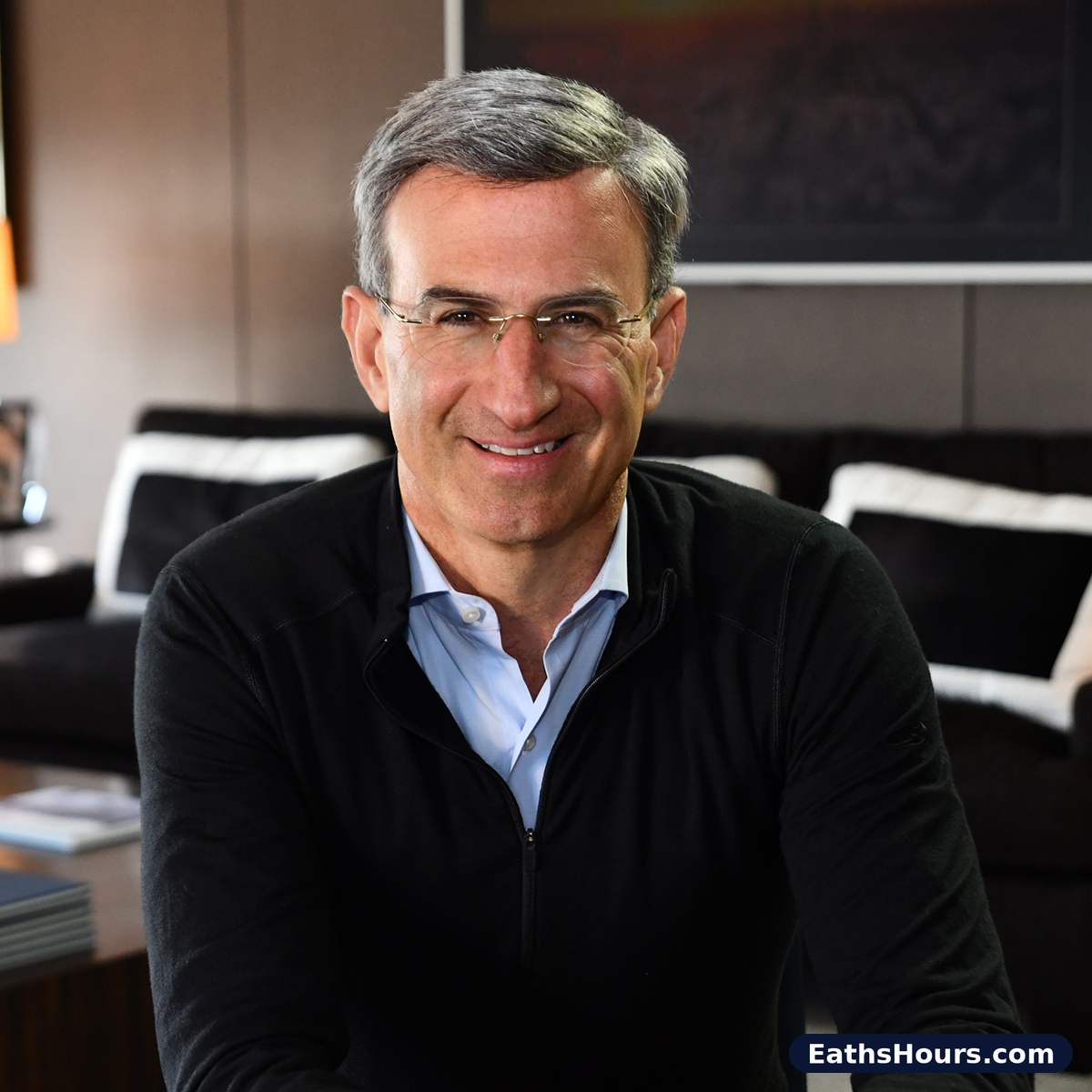
The most recent widely published portrait of him, from 2023, shows exactly that combination: a high, receded hairline, short grey hair with full coverage, and the same rimless glasses he has worn since his Washington years. Nothing in the dated record shows a stage at which his hair was ever absent.
Does Peter Orszag Have Thinning Hair?
To a mild and entirely ordinary degree, yes — comparing recent interviews with footage from his OMB years shows a hairline that has matured at the temples and a texture that looks somewhat less dense than it did in his forties. The honest limits matter here: this is an observation from photographs, not a medical finding, and no doctor, stylist or statement from Orszag himself has ever described his hair as a condition.
The pattern visible in the pictures — gradual temple recession across many years, with coverage retained on top — is consistent with the common form of age-related hair thinning most men experience to some degree by their late fifties. It has progressed slowly enough that no two photos a few years apart show a dramatic difference; the change only looks sudden when a 2009 portrait is placed directly beside a 2025 broadcast still.
Is Peter Orszag Wearing a Wig in 2026?
There is no verified evidence that Peter Orszag wears a wig, toupee or any kind of hair system. No credible outlet, interview or official statement has ever confirmed or even seriously reported the claim. The rumour mostly comes from the fact that his hairstyle has stayed remarkably consistent for two decades, which some viewers interpret as a sign of something artificial, even though disciplined grooming explains it just as easily.
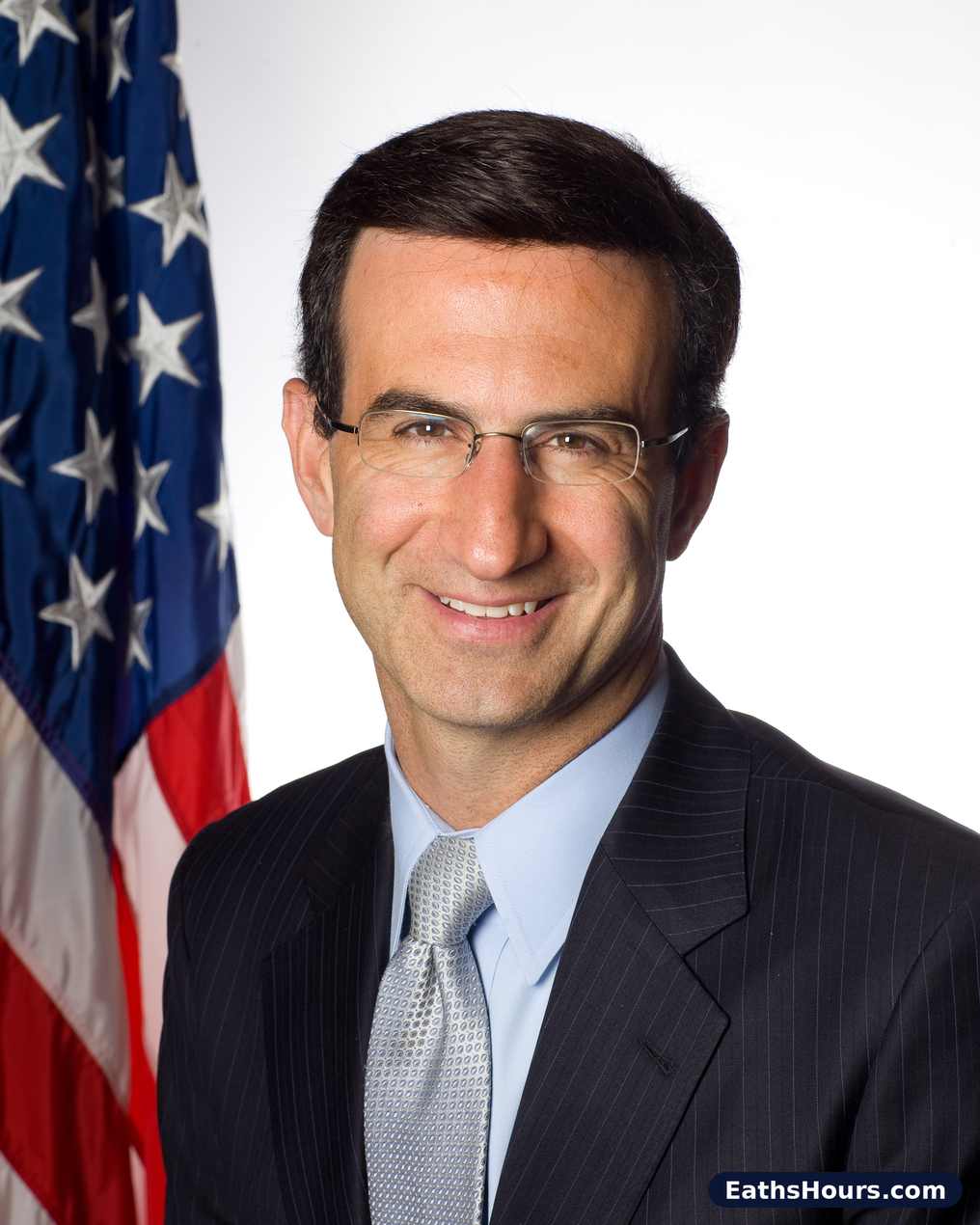
The dated photographs actually argue against the theory. A hairpiece story would predict a static look, but Orszag’s hair visibly changes across the record in exactly the way natural hair does: dark in his 2009 official portrait, salt-and-pepper at the temples in casual mid-2010s photos, and largely grey in his 2023 Lazard-era portrait. Unscripted family photographs from 2015 show the same in-between stage as his professional pictures from that year. Progressive greying, in step with his age, across official and candid shots alike, is the signature of real hair aging — not of a replacement. Orszag himself has never publicly addressed the speculation, which is common among executives who simply do not consider appearance commentary worth responding to.
Peter Orszag Hairline Explained
Photo comparisons across the last two decades show three consistent patterns:
- A gradually receding hairline at the temples, visible as early as his CBO portraits and more pronounced today — the most common pattern of male hairline change.
- A dramatic colour change, from dark brown in 2009 to mostly grey by 2023, which exaggerates the impression of loss: grey hair against light skin reads as “thinner” on camera even where coverage is unchanged.
- A hairstyle that has barely changed in shape — short, parted and swept to the side — which keeps the overall look camera-ready regardless of the underlying changes.
None of these points suggest anything beyond ordinary aging. There is no year in the record where his hair abruptly improves, disappears or changes texture — the three things that usually fuel a genuine hairpiece story.
Does Camera Lighting Affect How His Hair Looks?
Yes. Studio lighting used in financial television tends to flatten and smooth hair texture, and overhead lights striking grey or light-coloured hair can make natural thinning look more dramatic than it is, because the contrast between hair and scalp drops. The same head of hair can look fuller in a softly lit portrait and sparser under a hard broadcast key light, which is one reason screenshot comparisons from television appearances are the least reliable evidence of all.
Peter Orszag’s Hair Through the Years
The fairest test of any hair rumour is the timeline, and Orszag’s is unusually well documented because he has been photographed in public roles since his thirties.
- 2007–2008, the CBO years: his official Congressional Budget Office portrait shows dark hair already worn with a high hairline and the same side part he uses today.
- 2009–2010, the OMB years: his official White House portrait and Oval Office photographs show the dark-haired version most older comparisons use — neat, short, and already receding slightly at the temples.
- 2011–2016, the Citigroup years: conference and lecture photographs show the transition stage, with grey appearing first at the temples and sides while the top stayed dark.
- 2015, off duty: a candid photograph with his wife at the Peterhof fountains shows that same salt-and-pepper stage in holiday clothes and sunglasses — the look was not a studio creation.
- 2023, the Lazard portrait: the firm’s leadership-era photograph shows hair that is now mostly grey, cut in the same shape as always, with full coverage.
- 2024–2026, the CEO years: broadcast appearances since he added the chairman’s title show no further change beyond the settled grey — the storyline, such as it is, has been stable for years.
Read in sequence, the photographs show one continuous, gradual process. That is precisely why the wig theory struggles: it has to explain away a decade and a half of in-between stages that no hairpiece narrative needs and no hairpiece produces.
Public Appearance and TV Look
On screen, Orszag favours a conservative, businesslike look: dark suits, minimal styling, rimless glasses, and a hairstyle that prioritises neatness over trend. This polished, camera-ready image is standard for executives who appear regularly on financial news, where a consistent public image builds recognition and trust with investors and clients.
The consistency itself is part of the explanation for the rumours. A man who wears the same haircut, the same glasses and the same suit style for twenty years will eventually look “unchanged” in a way that invites suspicion — when the simpler truth is that he found a formula in his thirties and never had a reason to revise it.
Early Life and Education
Peter Orszag was born in Boston, Massachusetts, and grew up in Lexington, Massachusetts, the son of Reba and Steven Orszag — his mother ran a research and development company, and his father was a mathematics professor, most notably at Yale. His brother Jonathan is also an economist. Orszag graduated from Phillips Exeter Academy with high honours in 1987, then earned an A.B. in economics from Princeton University in 1991, graduating summa cum laude and Phi Beta Kappa.
He then studied at the London School of Economics as a Marshall Scholar, earning an M.Sc. in 1992 and a PhD in 1997. His doctoral thesis, Dynamic Analysis of Regime Shifts under Uncertainty, examined how economies behave through abrupt transitions — a subject that foreshadowed his later work on fiscal policy during the 2008 financial crisis, when abrupt transition stopped being theoretical.
Peter Orszag Career Journey and Rise to Fame
Orszag’s career spans government, academia and finance:
- Served as a senior economist and adviser on the Council of Economic Advisers (1995–1996), then as Special Assistant to the President for Economic Policy (1997–1998), during the Clinton administration
- Lectured in macroeconomics at the University of California, Berkeley (1999–2000), then became a senior fellow at the Brookings Institution, where he co-founded and directed The Hamilton Project in 2006
- Directed the Congressional Budget Office from January 2007 to November 2008, expanding its health-policy analysis ahead of the coming reform debate
- Served as the 37th Director of the Office of Management and Budget under President Obama from January 2009 to July 2010, at the height of the financial crisis response
- Joined Citigroup in 2011 as Vice Chairman of Corporate and Investment Banking and Chairman of its Financial Strategy and Solutions Group
- Joined Lazard in May 2016 as a Vice Chairman of Investment Banking, later leading its Financial Advisory division and co-leading its Global Healthcare group
- Created Lazard Geopolitical Advisory in 2022 while running the firm’s advisory business
- Became CEO of Lazard on October 1, 2023, announcing an aim to double the firm’s revenue by 2030
- Took on the additional role of Chairman of Lazard’s board effective January 1, 2025
He also serves on the boards of the Institute for Advanced Study, the Peterson Institute for International Economics and Mount Sinai Hospital, and writes columns for Bloomberg Opinion, having previously been a contributing columnist for the New York Times.
Peter Orszag Net Worth in 2026
No audited net-worth figure exists for Peter Orszag, and he has never published one. What circulates instead are estimates, and they spread widely: financial tracking and biography sites put his net worth anywhere between roughly $10 million and $35 million as of 2026, with several recent estimates clustering in the $10 million to $25 million band and one insider-holdings tracker, working from his Lazard share ownership, arriving at a figure nearer $37 million. All of these are modelled estimates built from public clues — chiefly his executive pay and his stock filings — not records of his actual wealth, and none should be read as a confirmed total.
What the estimates are built on is real, though. Orszag has earned at the top level of investment banking for a decade and a half, at Citigroup and then Lazard, and securities filings in early 2026 showed him holding roughly 211,000 shares of Lazard stock directly — a stake worth on the order of $9 million to $10 million at the time, before counting a career’s worth of bonuses, prior equity and private assets that no filing discloses. That documented base is why the estimates sit in the tens of millions rather than the single digits, even though the exact figure remains unknowable from outside. Wealth trackers face the same problem with every executive profile — the method is identical to the one behind estimates like the sophie rain net worth figures elsewhere on this site, where reported ranges stand in for finances that have never been publicly disclosed.
Peter Orszag’s Documented Pay: What Lazard’s Filings Show
Unlike his net worth, Orszag’s pay as Lazard’s chief executive is a matter of public record, because Lazard files its executive compensation with the Securities and Exchange Commission. Compensation trackers summarising Lazard’s proxy statements put his total compensation at $11.4 million for fiscal 2024 and $13.7 million for fiscal 2025, with the 2025 package built on a base salary of $900,000 and the rest delivered as bonus and stock awards.
His first year as CEO was reportedly far larger on paper — compensation summaries put his fiscal 2023 package at roughly $30 million, swollen by the one-time stock awards that accompany a chief-executive transition. Figures like those explain both halves of the net-worth debate: the documented pay is high enough to make a fortune in the tens of millions entirely plausible, and variable enough, year to year, to make any single net-worth number a guess.
Children and Family Life
Peter Orszag has been married to journalist Bianna Golodryga since 2010; at the time of their wedding she was a co-host of ABC’s GMA Weekend, and she later became a CNN anchor and senior global affairs analyst. Between his current marriage, his first marriage to Cameron Hamill (1997–2006), and an earlier relationship, he is a father of five children — two from his first marriage, one born in 2009, and a son and a daughter with Golodryga.

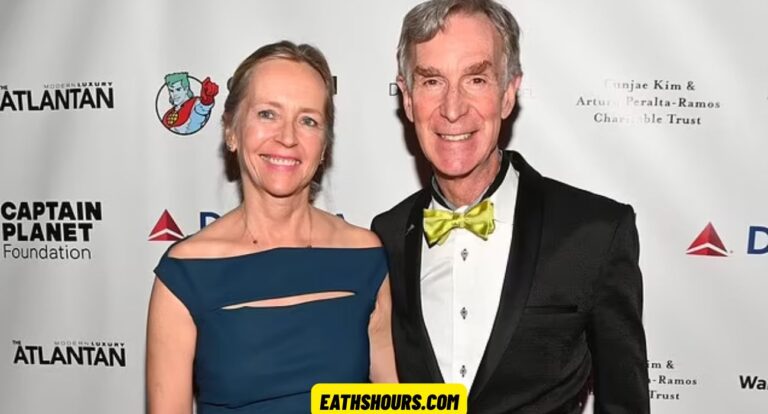
The couple lives in New York and largely keeps their family life away from the media spotlight, which is consistent with how both have handled their public profiles throughout their careers. What little is visible publicly — the occasional travel photograph, including a 2015 shot of the couple at the Peterhof fountains in Russia — shows the private counterpart to the broadcast image: same man, same hair, no studio lighting required.
Lifestyle and Personality
Beyond his executive role, Orszag is known for a disciplined, intellectually driven lifestyle. He continues to write opinion columns on economic policy, sits on multiple nonprofit and academic boards, and is known among colleagues for a structured, detail-oriented approach to leadership — a reputation established early: a 2009 New York Times profile of the 40-year-old budget director was headlined “Just 40 and Going Like 60,” after the punishing pace he kept.
Profiles over the years have consistently described a serious runner and an early riser who treats physical routine as part of the job’s infrastructure. It is the same temperament visible in the public image — nothing about the presentation is improvised, including the haircut.
Peter Orszag’s Books and Economic Writing
Orszag’s public reputation rests as much on his writing as on his job titles. With Peter Diamond he wrote Saving Social Security: A Balanced Approach (2004), the book that made the “Diamond-Orszag plan” a reference point in the retirement debate. He co-edited American Economic Policy in the 1990s (2002), co-authored Protecting the American Homeland (2002) on post-9/11 preparedness, and contributed to Aging Gracefully (2006), a volume on retirement security in America.
That writing career continues alongside the executive one: he is a columnist for Bloomberg Opinion and was previously a contributing op-ed columnist for the New York Times. Whatever search brought a reader to his hairline, the bibliography is the part of the record he actually authored.
Why Do Celebrity Hair Rumors Spread Online?
Hairline speculation is not unique to Orszag. It follows a predictable pattern for any public figure who appears on camera regularly:
- High-definition television exposes small physical changes that casual observers would never notice in person
- Side-by-side photo comparisons spanning many years exaggerate gradual change
- Search engines and social platforms reward curiosity-driven questions, which pushes appearance-based searches higher over time
- A consistent, unchanging hairstyle across decades often gets mistaken for artificial enhancement, even when it simply reflects careful grooming
This cycle repeats across politics, finance and entertainment whenever someone spends enough years in front of a camera.
Interesting Facts About Peter Orszag
- He was a Marshall Scholar at the London School of Economics, one of the most competitive postgraduate awards available to Americans
- He directed both the Congressional Budget Office and the Office of Management and Budget — a rare combination; few people have run both of Washington’s budget institutions
- He is a member of the National Academy of Medicine, an unusual honour for an economist, reflecting his health-policy work
- He joined Lazard in 2016 and became its CEO just seven years later, adding the chairman’s title in 2025
- His PhD thesis on regime shifts under uncertainty effectively rehearsed, a decade early, the kind of economic rupture he would later manage through at the OMB
- He regularly writes public commentary on fiscal policy alongside his executive duties
Peter Orszag Compared to Other Public Figures With Hair Rumors
Hairline speculation is common among prominent politicians and executives who spend years in front of television cameras. Some public figures have openly discussed cosmetic hair procedures in interviews over the years, which shows that such choices are not unusual among people in high-visibility careers — and, by contrast, how a confirmed case actually looks: a named procedure, discussed on the record.
Orszag’s situation differs in that key respect: no confirmation of any procedure or hairpiece has ever surfaced, and neither has any denial, because he has never engaged with the subject at all. That keeps his case firmly in the category of unverified speculation rather than confirmed fact — and the gradual, fully photographed transition of his hair is, in the end, the strongest evidence available either way.
Social Media Presence
Orszag maintains a relatively low-key personal social media presence compared to many executives of his profile. His most active professional footprint is on LinkedIn, where he shares updates related to Lazard’s strategy, market commentary and industry appearances. He is more visible through his published columns and television interviews than through personal social channels, which fits his reputation as a policy-minded executive rather than a media personality.
Has Peter Orszag Ever Addressed the Hair Rumors?
No. There is no interview, column, speech or social post on record in which Orszag discusses his hair, the wig speculation, or his appearance at all. His public output is exclusively professional — budgets, markets, deals and policy — and the entire hair conversation exists in the space left by that silence.
That silence is worth reading correctly. It is not evidence of a secret; it is the default setting of a man whose public life began in budget committees, where the work is the message. The rumour persists not because he has hidden anything, but because he has never considered the question worth the time it would take to answer it.
Conclusion
The honest answer to whether Peter Orszag is bald or wearing a wig is straightforward. He is not bald, and no credible source has ever confirmed that he wears a hairpiece. What the photos and interviews actually show is gradual, age-appropriate change — a receding hairline, thinning that bright studio lights exaggerate, and hair that has gone from dark brown to grey — paired with a hairstyle that has stayed remarkably consistent for years, which is exactly the kind of detail that fuels online speculation even when there is no real story behind it.
Orszag’s actual story is far more substantial than his hairline. From directing federal budget policy under two presidents to leading one of the world’s most influential financial advisory firms, his career reflects a rare combination of public service and private-sector leadership. The photographs show nothing more unusual than male pattern baldness advancing slowly and publicly, the way it does for most men — and a man who was always going to be remembered for the budgets, not the hairline.
FAQs
Is Peter Orszag bald?
No. He is not bald. He shows natural, gradual hairline recession and greying consistent with his age, but he retains full coverage and a styled head of hair in every recent photograph and broadcast appearance.
Does Peter Orszag wear a wig?
There is no verified evidence that he wears a wig, toupee or hair system of any kind. The claim remains unconfirmed speculation, and the dated photo record — showing his hair greying gradually across fifteen years of official and candid photographs — is inconsistent with it.
What is Peter Orszag’s net worth in 2026?
No verified figure exists. Tracker estimates for 2026 place his net worth roughly between $10 million and $35 million, based mainly on his Lazard compensation — documented at $11.4 million for fiscal 2024 and $13.7 million for fiscal 2025 — and his disclosed Lazard share holdings. Treat every figure as an estimate, not an audited total.
Who is Peter Orszag married to?
He has been married to journalist Bianna Golodryga since 2010. His first marriage, to Cameron Hamill, ran from 1997 to 2006.
What was Peter Orszag’s role in the Obama administration?
He served as the 37th Director of the Office of Management and Budget from January 2009 to July 2010, after directing the Congressional Budget Office from 2007 to 2008.
When did Peter Orszag become Lazard’s CEO?
He became CEO of Lazard on October 1, 2023 — announced earlier that year as the successor to Ken Jacobs — and added the role of Chairman effective January 1, 2025.