Your First Aid Skills Have an Expiry Date
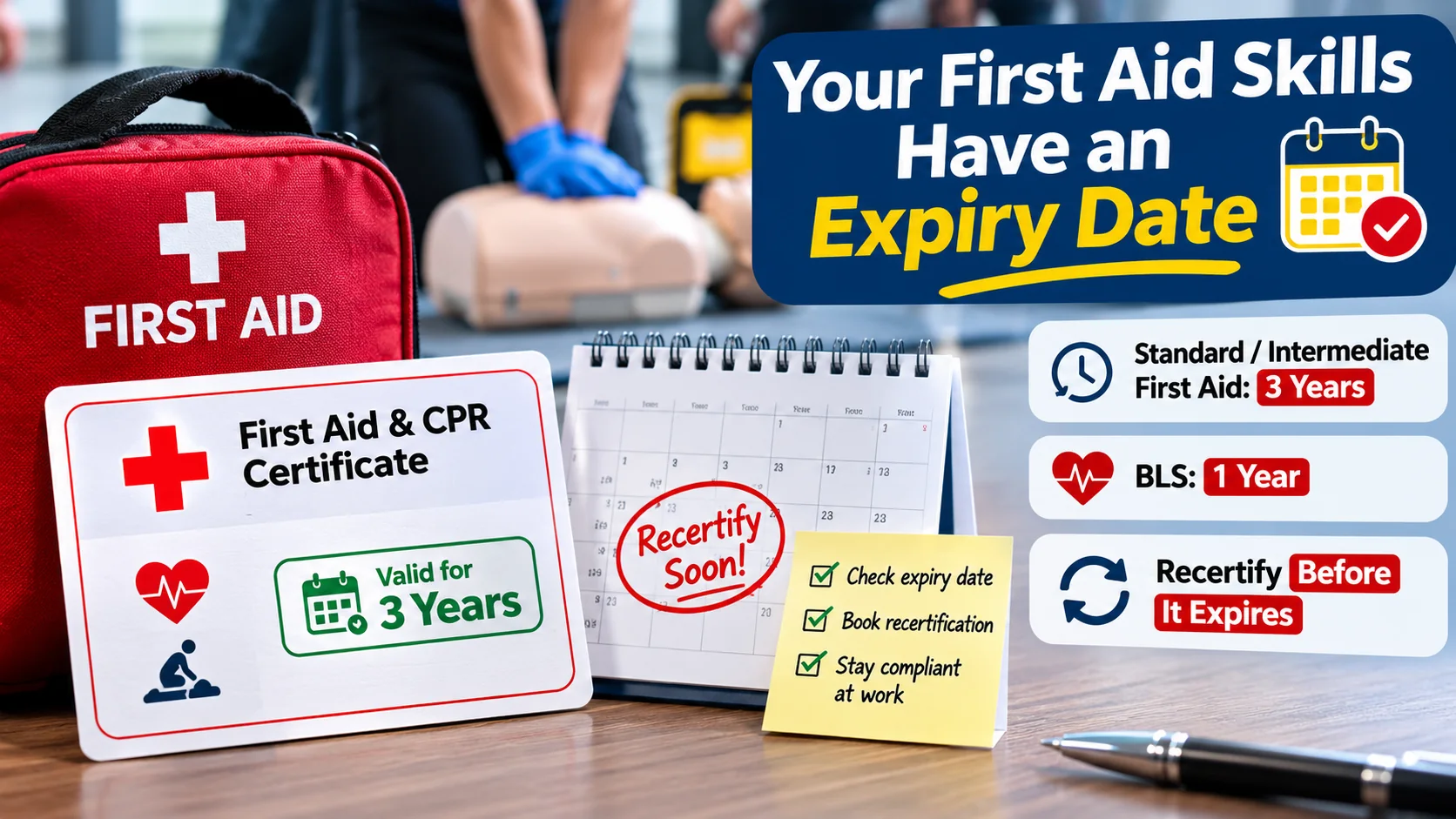
First aid certificates expire because skills fade fast. A Standard (Intermediate) First Aid certificate is generally valid for three years, while BLS lasts one. Recertifying before your card lapses keeps you compliant at work and saves you from retaking the full course.
Everything on a schedule eventually needs a reset, and first aid skills are no exception. Research on resuscitation training consistently shows that CPR skills decline within months if they aren’t practised. That’s why certificates expire and why Toronto workers should plan their First Aid recertification before the date on their card passes.
Many people treat their first aid card like a box they ticked once. In reality, it’s closer to a subscription: it works well while it’s current and starts to lose value the longer you leave it. This article explains how long certificates last, what happens when they lapse, and how to keep your skills ready between courses.
How long is a first aid certificate valid?
A Canadian Red Cross Standard (Intermediate) First Aid and CPR certificate is generally valid for three years. Basic Life Support (BLS) is typically valid for one year. Check the date printed on your certificate and set a reminder well ahead of it.
Some employers set their own, stricter rules. A workplace may ask for annual CPR refreshers even if the certificate itself is valid for longer, especially in high-risk settings. Always check your employer’s policy as well as the date on your card.
Why do first aid skills fade so quickly?
First aid is a physical skill that most people rarely use. Without practice, details slip: the correct compression depth, the rhythm of 100 to 120 compressions per minute, the order of steps, the hand position for an infant. When an emergency finally happens, stress makes recall even harder. Regular recertification resets those details and rebuilds confidence.
What happens if your certificate expires?
An expired certificate may no longer meet your employer’s requirement. In Ontario, workplaces need WSIB-approved first aid training for designated first aiders, so a lapsed card can leave both you and your employer out of compliance. In many cases, you’ll also lose eligibility for the shorter recertification course and need to retake the full program.
A lapsed certificate can also affect job applications, volunteer roles and placements. Coaches, childcare staff, lifeguards and many trades are commonly asked to show a current card before they start. Renewing on time avoids last-minute scrambling.
What is covered in a recertification course?
Recertification is a shorter refresher that reviews and re-tests core skills: CPR and AED use for all ages, choking, bleeding control, and recognizing medical emergencies such as stroke and heart attack. It also brings you up to date on any changes to guidelines or course names.
For example, under the updated CSA Z1210 standard, Standard First Aid is now called Intermediate First Aid, and Emergency First Aid is now Basic First Aid. A recertification course explains these changes so your new certificate matches what employers expect.
Is recertification the same as taking the full course again?
No. Recertification is designed for people who already hold a valid certificate. It moves faster, assumes you know the basics, and focuses on practice and testing.
The full course takes longer because it teaches everything from the beginning. That time saving is the main reason to renew before your card expires.
How can you keep skills sharp between courses?
Review your course material once or twice a year, refresh the CPR rate of 100 to 120 compressions per minute, and know where the AED is at your workplace.
A few other habits help:
- Walk through the steps of CPR in your head when you notice an AED in a public place.
- Check your home and car first aid kits every few months and restock them.
- Join workplace drills or suggest one if your team has never practised.
- Talk through what you would do in common emergencies with family members.
Who should be tracking renewal dates?
Individuals should track their own certificates, but employers benefit from keeping a simple record of who is trained and when each certificate expires. A shared spreadsheet or calendar reminder can prevent a team from discovering, on the day of an inspection or an emergency, that nobody on shift has a current card.
Can you recertify with blended learning?
Many recertification courses are available in a blended format. You review theory online at your own pace, then attend a shorter in-person session for hands-on practice and skills testing. This option suits busy schedules and shift workers, because most of the learning happens when it suits you. The in-person portion is still essential, since CPR depth, rate and AED use must be practised and assessed on manikins.
What should you bring to a recertification course?
Bring your current certificate or certificate number, comfortable clothing that allows you to kneel on the floor, and any questions from situations you have faced since your last course. Instructors welcome real examples, and discussing them helps the whole class connect the skills to everyday life. Arriving with your certificate details also makes it easier to confirm you’re eligible for the shorter recertification option.
After the course, take a few minutes to update your records. Save a digital copy of your new certificate, send it to your employer or placement coordinator, and set the next reminder straight away. Starting the renewal clock on the same day you certify is the easiest way to make sure your skills, and your card, never quietly expire again.
What should be on your recertification checklist?
- Find your certificate and note the expiry date.
- Set a reminder three months before it expires.
- Confirm the level your employer requires.
- Book recertification before the card lapses.
- Share your new certificate with your employer.
- Restock your first aid kits after your course.
If you’re looking for first aid training near Bloor and Christie, Christie Pits, the Annex, or other areas close to our facility, then you may reach out to Coast2Coast First Aid/CPR – Toronto in that area. If your card is close to expiring, find a CPR recertification class before the date passes.
Frequently Asked Questions
1. How long is Standard First Aid valid?
Generally three years from the date of certification.
2. Can I recertify after my card expires?
Usually you must recertify before expiry; after that, you may need the full course.
3. Is recertification shorter than the full course?
Yes. It focuses on reviewing and re-testing core skills.
4. Do Ontario employers require WSIB-approved training?
Yes. Workplace first aiders in Ontario need WSIB-approved first aid training.
5. How often should I practise CPR?
Ideally, review it at least once a year between formal courses.