Start Me Up FintechAsia Net – Asia’s Premier Fintech Startup Gateway
Building a financial technology startup requires more than an innovative idea. Entrepreneurs must understand customer needs, develop secure products, navigate financial regulations, find funding, and compete in rapidly changing markets. For founders exploring these challenges, fintechasia net start me up is a search term associated with startup-focused content on FinTechAsia.net.
The Start Me Up category covers topics related to entrepreneurship, fintech innovation, launching digital businesses, and developing startup strategies. Its articles can help readers explore opportunities and learn about the practical considerations involved in building a fintech venture.
However, it is important to distinguish between an online information resource and a formal startup accelerator. Although articles may discuss mentorship, investor connections, funding, and market research, readers should independently verify whether specific services are currently offered before relying on them.
This guide explains what Start Me Up FintechAsia Net is, how founders can use its content, which fintech trends deserve attention, and how to evaluate startup opportunities responsibly.
Profile Biography Table
The following table summarizes the topic and its publicly identifiable context.
| Profile Detail | Information |
|---|---|
| Name | FinTechAsia.net Start Me Up |
| Website | fintechasia.net |
| Related section | Start Me Up |
| Main subject | Fintech entrepreneurship and startup development |
| Geographic focus | Asian fintech markets, as reflected in the site’s subject matter |
| Intended audience | Startup founders, entrepreneurs, fintech professionals, and business researchers |
| Relevant topics | Startup planning, market research, funding, financial technology, and business growth |
| Content format | Online articles and informational guides |
| Application | Learning, research, business planning, and exploring startup opportunities |
| Important limitation | Specific accelerator, funding, mentoring, or investor-matching services should be verified individually |
This profile describes the website’s editorial focus rather than confirming that it operates a dedicated incubation program, provides investment capital, or guarantees access to business partners.
What Is Start Me Up FintechAsia Net?
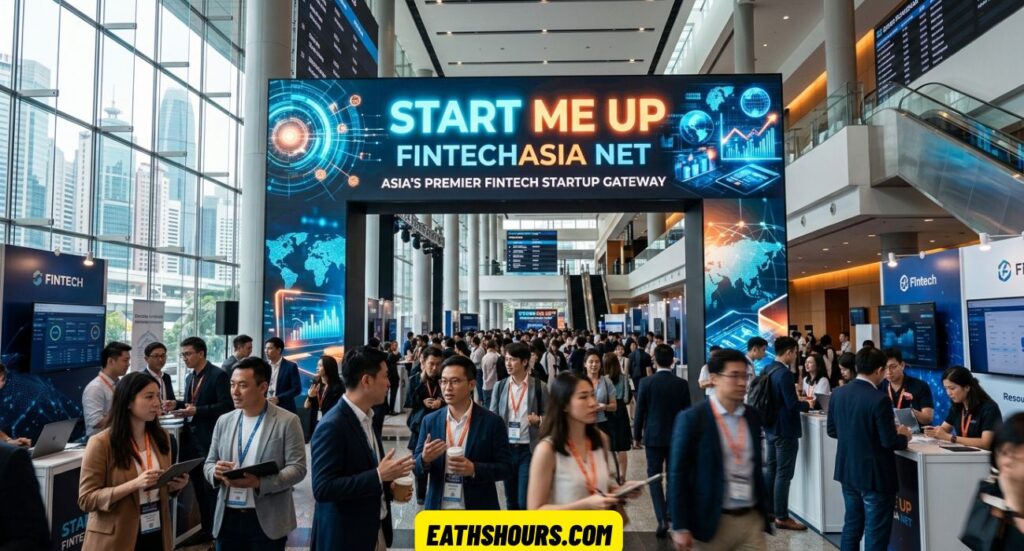
FintechAsia Net Start Me Up refers to startup-oriented content associated with FinTechAsia.net. The website’s Start Me Up category includes articles about entrepreneurship, startup development, and business-building strategies.
For someone planning a fintech business, this type of resource can provide an introduction to the questions that matter during the early stages of a venture.
For example, an entrepreneur developing a digital payment application might need to research:
- The problem the application will solve.
- The customers most likely to use it.
- Existing payment providers and competing products.
- The costs of developing and maintaining the service.
- Applicable licensing, privacy, and cybersecurity requirements.
- Potential sources of capital and strategic partnerships.
- Ways to measure customer adoption and business performance.
A startup-focused information hub can help organize this research and identify subjects that require deeper investigation.
Is Start Me Up a startup accelerator?
Not necessarily. A startup accelerator typically operates a defined program with an application process, structured mentoring, milestones, and sometimes investment or investor introductions.
The existence of a Start Me Up category and articles about startup growth does not, by itself, establish that FinTechAsia.net provides all these services.
Founders should check the official website for current program details, eligibility rules, application instructions, published fees, and evidence of actual partnerships before treating it as an accelerator or funding provider.
Why Start Me Up FintechAsia Net Matters
Financial technology businesses operate at the intersection of software, finance, regulation, and consumer trust. An apparently simple product can involve complicated decisions about payment processing, identity verification, fraud prevention, data protection, and financial risk.
Startup-oriented content is useful because it helps founders identify these challenges before committing substantial resources.
1. Better understanding of market opportunities
Entrepreneurs need to know whether a genuine customer problem exists before developing a product.
Research into digital payments, small-business finance, financial inclusion, remittances, and digital banking can help founders identify underserved customer groups.
For instance, a founder might discover that small retailers struggle to reconcile transactions from several payment channels. That problem could inspire a payment-management or accounting product, provided customer interviews confirm that the need is real.
2. More informed business planning
A strong startup plan identifies the target market, product requirements, revenue model, operating costs, and measurable goals.
Learning about startup development can help founders move beyond a general idea and develop a practical plan for testing it.
3. Awareness of regional differences
Asia is not a single, uniform fintech market. Payment infrastructure, customer behavior, data-protection rules, licensing requirements, and banking access vary across jurisdictions.
A product designed for Singapore, for example, may require substantial changes before it can operate in Indonesia, India, Malaysia, or the Philippines.
Regional research helps founders identify those differences before choosing where to launch.
4. More realistic funding expectations
A startup may require funding for product development, compliance reviews, security testing, staffing, and customer acquisition.
Understanding the available financing models helps entrepreneurs decide whether to bootstrap, seek angel investment, apply for a suitable grant, or approach a venture capital firm.
None of these options guarantees funding. The right choice depends on the company’s stage, financial needs, growth potential, and ability to demonstrate progress.
See Also : MABS BrightStarCare.com Mobile App Login: Complete Guide to Access
Key Services Provided by Start Me Up FintechAsia Net
The value of a startup resource depends on how effectively it helps entrepreneurs solve real business problems. FinTechAsia.net’s published Start Me Up content discusses startup development, research, market opportunities, and growth planning.
The following areas explain how founders can approach these needs. They are practical startup-development functions, not a guarantee that every service is directly provided by the website.
Incubation and Acceleration
Incubation and acceleration help startups move from an early idea toward a viable, growing business.
An incubator generally supports early-stage businesses as they develop their business models and products. An accelerator usually offers a more structured, time-limited program designed to help an existing startup grow faster.
Founders can apply these principles by:
- Testing whether customers genuinely need their product.
- Developing a minimum viable product (MVP).
- Collecting feedback from prospective users.
- Improving pricing and distribution strategies.
- Setting measurable product-development milestones.
For example, a startup developing an expense-management application could begin with a basic product that helps small businesses categorize transactions. Feedback from a small group of customers would help the team decide which features to develop next.
What to verify: If you are looking for a formal FinTechAsia.net incubation program, confirm its current availability, application requirements, program duration, and participating mentors before applying.
Market Access
Market access means reaching potential customers, distribution partners, and business networks in a particular market.
For fintech startups, this may involve understanding local banking infrastructure, identifying suitable payment processors, researching competitors, and establishing partnerships with financial institutions.
A founder considering a cross-border payment product should investigate:
- The countries where customers send and receive money.
- The payment methods those customers already use.
- Transaction fees and settlement times.
- Local licensing and compliance requirements.
- Customer acquisition costs and potential demand.
Research can help prioritize markets, but local customer interviews and independent verification remain essential.
Regulatory Navigation
Financial technology is subject to regulations that vary according to the product, business model, and jurisdiction.
A startup offering digital wallets may face different requirements from a company providing accounting software or fraud-detection tools.
Important areas to investigate include:
- Financial services licensing.
- Know Your Customer (KYC) procedures.
- Anti-Money Laundering (AML) obligations.
- Data protection and privacy.
- Cybersecurity and operational resilience.
- Consumer protection and complaints handling.
- Cross-border transfers and data-sharing rules.
Founders should consult the relevant financial regulator and qualified legal or compliance professionals. General articles are useful for orientation but cannot replace jurisdiction-specific advice.
Access to Funding
Fintech startups may explore several financing options, depending on their maturity and business model.
| Funding source | Best suited for | Main consideration |
|---|---|---|
| Bootstrapping | Early experiments and founders with available resources | Growth may be slower because capital is limited |
| Angel investors | Early-stage ventures with a credible founding team | Investors may request equity |
| Venture capital | Startups with substantial growth potential | Expectations for growth and returns can be demanding |
| Grants | Projects meeting a specific program’s criteria | Eligibility and permitted spending vary |
| Strategic partnerships | Businesses with a clear commercial fit | Agreements may involve exclusivity or other obligations |
| Revenue-based growth | Businesses with existing, predictable revenue | Repayments depend on the financing terms |
Start Me Up-related content discusses startup funding and investor engagement as part of the broader entrepreneurial landscape. However, readers should not assume that browsing the website automatically provides access to investment capital.
Before approaching investors, prepare a concise pitch deck, financial projections, evidence of customer demand, a clear explanation of the revenue model, and a realistic funding request.
Startup Success Stories from the Platform
Success stories can help founders understand how businesses identify problems, build products, attract customers, and overcome early obstacles. They are especially valuable when they explain the decisions behind a company’s progress rather than presenting success as inevitable.
FinTechAsia.net has published startup-focused material describing the value of fintech innovation and startup visibility. However, the existence of these articles is not sufficient evidence that particular companies achieved measurable success because of the Start Me Up initiative.
For an accurate assessment, look for independently verifiable examples that include the company’s name, product, development timeline, and measurable results.
What makes a fintech startup case study useful?
A strong case study should answer five questions:
- What problem did the company solve? A clear customer problem provides context for the product.
- How did it validate demand? Interviews, pilot programs, and repeat usage can provide evidence.
- How did it earn revenue? The business model should be understandable and commercially plausible.
- How did it manage risk? Security, regulatory compliance, and customer protection are particularly important in fintech.
- What results can be verified? Customer growth, revenue, partnerships, or funding should be supported by reliable evidence.
An illustrative example
Consider a hypothetical startup that develops invoicing software for small businesses.
Its founders interview local merchants, build a basic invoicing tool, and test it with a small customer group. They discover that merchants also need payment reminders and simple cash-flow reports. The team adds those features and introduces a subscription plan.
This example illustrates a possible startup-development process; it is not a verified FinTechAsia.net success story.
The lesson is straightforward: a startup’s progress should be evaluated through evidence of customer value, sustainable economics, and reliable execution.
How to Get Started with Start Me Up FintechAsia Net
If you want to use the website as part of your startup research, follow a structured process rather than assuming every feature mentioned in an article is available as an active service.
Step 1: Visit the official website
Open FinTechAsia.net and look for the Start Me Up category. Review the available articles, publication dates, authorship, and links to related resources.
Step 2: Define your startup problem
Identify your intended customers and the financial problem you want to solve. Avoid starting with a technology simply because it is popular.
Step 3: Research your market
Study relevant startup guides, competing products, customer behavior, industry developments, and local regulatory requirements. Confirm important claims using primary sources.
Step 4: Prepare a basic business plan
Document your value proposition, target market, revenue model, operating costs, product roadmap, and major risks.
Step 5: Validate the idea
Interview potential customers, test a prototype, and track whether people use or pay for the solution. Treat early interest as a signal to investigate, not proof of product-market fit.
Step 6: Verify support opportunities
If the website advertises applications, events, mentors, funding opportunities, or partnerships, check the eligibility criteria, fees, terms, and legitimacy before sharing information or committing money.
What should you prepare before approaching a startup program?
A simple preparation checklist can help you make better use of available resources.
- A one-sentence description of the customer problem.
- A clearly defined target audience.
- Evidence from customer interviews or initial testing.
- A short explanation of your product and competitive advantage.
- A basic financial forecast and funding requirement.
- An initial regulatory and cybersecurity assessment.
- A short pitch deck or business summary.
- Specific questions for potential mentors or partners.
You do not need a fully developed product to begin researching opportunities. You do need a clear understanding of the problem you want to solve.
Events and Networking Opportunities
Networking can help fintech founders meet potential customers, experienced operators, investors, researchers, and technology partners.
Industry events also provide opportunities to learn about emerging technologies and compare business approaches. Useful formats include:
- Fintech conferences and industry exhibitions.
- Startup pitch competitions.
- Founder workshops and business clinics.
- University entrepreneurship events.
- Online discussions and educational webinars.
- Meetings organized by accelerators or industry associations.
FinTechAsia.net’s published content discusses networking and educational activities in connection with startup development. Nevertheless, prospective participants should check the website directly for actual event listings, dates, registration procedures, and organizer details.
How to network effectively
Before attending an event, prepare a short introduction covering your product, intended customers, and the specific assistance you need.
Instead of asking an investor for funding immediately, you might ask for feedback on your business model or an introduction to someone with relevant industry experience.
After meeting a contact, follow up with a concise message and one clear next step. A relevant, well-prepared conversation is usually more useful than collecting a large number of contacts without a plan.
See Also : SFM Compile Explained: What It Is, How It Works, Tools & Errors
Collaboration with Government and Private Sectors
Fintech innovation often depends on cooperation between technology companies, established financial institutions, regulators, and public-sector organizations.
Each group can contribute something different.
| Stakeholder | Potential contribution |
|---|---|
| Government agencies | Startup policies, public programs, and information about business registration |
| Financial regulators | Licensing guidance, regulatory publications, and eligible testing arrangements |
| Banks and payment providers | Payment infrastructure, distribution, and potential commercial partnerships |
| Technology companies | Cloud services, APIs, security tools, and technical integration |
| Universities | Research, specialist talent, and entrepreneurship programs |
| Investors | Capital, business guidance, and commercial connections |
| Startup associations | Industry education, networking, and peer support |
These are common forms of ecosystem collaboration, not confirmed partnerships between every stakeholder and FinTechAsia.net.
Why partnerships require careful evaluation
A partnership may accelerate distribution or provide access to specialist capabilities, but it can also introduce dependencies.
Before signing an agreement, review ownership of intellectual property, data-sharing arrangements, commercial fees, service-level commitments, exclusivity clauses, and termination conditions.
For financial products, confirm that the proposed partner is appropriately authorized for the services it will provide. A well-known brand or an impressive presentation is not a substitute for due diligence.
The Role of Mentors and Advisors
Mentors and advisors can help founders challenge assumptions, identify blind spots, and make better-informed decisions.
A mentor might offer general business guidance, while an advisor with relevant expertise could help with a specific issue such as payment infrastructure, cybersecurity, fundraising, or regulatory strategy.
Useful mentoring topics include:
- Refining the value proposition.
- Choosing a suitable business model.
- Preparing investor presentations.
- Building a credible financial forecast.
- Developing customer acquisition strategies.
- Planning market entry.
- Identifying operational and compliance risks.
How to choose the right mentor
Look for relevant experience rather than impressive titles alone. Ask whether the person’s background matches your product, target market, or current business challenge.
Clarify how often you will meet, whether the arrangement involves payment or equity, what confidentiality applies, and whether conflicts of interest exist.
If a mentor is introduced through an online platform, independently verify their professional background. Be cautious of anyone promising guaranteed investment, pressuring you to pay unexpected fees, or requesting sensitive credentials.
A mentor can improve your decision-making, but responsibility for the business remains with the founders.
Fintech Trends Embraced by the Platform
Fintech startup content can help readers understand the technologies and business models shaping financial services. FinTechAsia.net publishes material related to fintech innovation, including discussion of payments, lending, and blockchain technology.
For founders, the key is to distinguish genuine customer needs from short-lived technology trends.
Digital payments
Digital wallets, payment gateways, QR payments, and faster payment systems create opportunities to simplify transactions. Startups must evaluate fees, interoperability, fraud risks, and local payment preferences.
Artificial intelligence in finance
AI can support document processing, customer service, fraud detection, and risk analysis. Financial applications require careful testing for bias, inaccurate outputs, data leakage, and explainability.
Regulatory technology and cybersecurity
Regtech tools can help organizations manage compliance workflows, while security technologies protect accounts and transactions. Neither removes the need for appropriate controls, monitoring, and human oversight.
Blockchain and digital assets
Distributed ledgers may support certain settlement, recordkeeping, and tokenization use cases. Startups must evaluate the business need, technical limitations, custody risks, and applicable digital-asset rules.
SME finance and financial inclusion
Small-business lending tools, digital bookkeeping, and accessible payment services may help underserved customers. Responsible design requires transparent pricing, appropriate data use, and fair treatment.
Which fintech trend should a startup choose?
The best opportunity is not necessarily the newest technology. It is the problem for which customers have a meaningful need and a willingness to adopt a practical solution.
Before investing, assess the potential market, existing alternatives, regulatory obligations, implementation cost, and ability to generate sustainable revenue.
Community and Knowledge Hub
A knowledge hub can help founders organize information about startup development, financial technology, business operations, and industry changes.
FinTechAsia.net’s Start Me Up archive includes articles about startup stages, accounting, valuation, and other business-building subjects. This makes the category a potential starting point for general entrepreneurship research.
Founders can make their research more useful by grouping resources into four categories:
- Business fundamentals: business plans, accounting, pricing, and cash-flow management.
- Product development: customer research, MVP design, testing, and product improvement.
- Industry knowledge: payment systems, lending, digital banking, and fintech regulation.
- Growth planning: customer acquisition, fundraising preparation, partnerships, and expansion.
How to evaluate the quality of online startup information
Not every online article provides the same level of evidence. Before acting on a recommendation, ask:
- Is the article dated and relevant to the current market?
- Does it identify the author and provide appropriate supporting sources?
- Are statistics and examples traceable to reliable evidence?
- Does it distinguish general guidance from legal or financial advice?
- Are commercial relationships or promotional claims disclosed where relevant?
- Can important claims be confirmed through regulators, official documentation, or independent sources?
For information about licensing, data protection, and financial services, prioritize the applicable regulator and official legal publications over general commentary.
Advantages and Limitations of Using FinTechAsia.net Start Me Up
The website may be useful as one component of a broader research process, but founders should understand both its potential benefits and the limits of relying on editorial content.
| Potential advantages | Limitations to consider |
|---|---|
| Provides startup-related reading material | Articles do not replace a tailored business plan |
| Helps introduce fintech concepts | Information may not cover every jurisdiction |
| Can suggest topics for further research | Claims need independent verification |
| Supports early-stage learning | Reading alone does not validate market demand |
| May help identify relevant industry topics | Current mentoring, funding, or event availability must be confirmed |
| Can complement other learning resources | It should not replace professional compliance advice |
The most effective approach is to combine online research with customer discovery, official regulatory guidance, independent market analysis, and advice from qualified professionals.
How to Measure Startup Progress After Using Online Resources
Reading startup guides is only useful if it improves decisions. Founders should define a small set of metrics that show whether their business is progressing.
The appropriate measures depend on the business model and stage of development.
| Startup stage | Useful indicators |
|---|---|
| Idea validation | Customer interviews, confirmed problems, willingness to pay |
| MVP development | Testing completion, usability feedback, product reliability |
| Early launch | Active customers, repeat usage, conversion rate |
| Revenue generation | Revenue, gross margin, acquisition cost, cash flow |
| Expansion | Customer retention, operational capacity, market-specific compliance readiness |
For a payment startup, for example, the number of app downloads may be less meaningful than successful transactions, repeat usage, fraud rates, and customer retention.
Avoid treating website views, social media attention, or investor interest as proof of a sustainable business. These signals can help guide further investigation, but they do not replace customer and financial evidence.
Safety, Privacy, and Due Diligence for Fintech Founders
Because fintech involves financial information and potentially sensitive business data, security should be considered from the beginning.
Before registering for a program, uploading a pitch deck, or contacting a potential investor through any online service, follow these precautions:
- Verify the website address and the identity of the organization.
- Read its privacy policy and terms of use.
- Avoid submitting passwords, bank login credentials, or unnecessary identity documents.
- Share confidential business information only when appropriate safeguards are in place.
- Confirm the identity of investors, mentors, and service providers independently.
- Review fees, investment terms, and contracts before making payments or commitments.
- Use secure authentication and appropriate access controls for business accounts.
- Consult qualified legal or compliance professionals when dealing with regulated activities.
Be especially cautious of claims promising guaranteed funding, guaranteed business success, or automatic regulatory approval. Legitimate startup support cannot eliminate commercial risk.
Alternatives to Consider Alongside Start Me Up FintechAsia Net
No single website should be your only source of startup guidance. Depending on your needs, other resources may provide more specialized support.
| Your objective | Resource to investigate | What to look for |
|---|---|---|
| Understand financial regulation | Your national financial regulator | Licensing rules, official guidance, and regulatory updates |
| Find structured startup support | Established incubators and accelerators | Published selection criteria, program structure, and verified alumni |
| Research payment infrastructure | Banks and licensed payment providers | Integration options, fees, coverage, and settlement terms |
| Explore startup funding | Reputable investors and official grant programs | Eligibility, investment criteria, and documented terms |
| Improve technical knowledge | Established developer documentation and security resources | Practical implementation guidance and security requirements |
| Research customer demand | Interviews, surveys, and small pilot projects | Evidence of real problems and willingness to pay |
For example, founders researching Singapore can consult the Monetary Authority of Singapore for official financial-sector information. Entrepreneurs targeting other countries should identify the corresponding regulator and applicable rules.
These alternatives complement online articles by providing more specific information for practical decisions.
Conclusion: Why Choose Start Me Up FintechAsia Net?
Fintechasia net start me up is a useful search starting point for people exploring fintech entrepreneurship, startup planning, and the development of financial technology businesses. FinTechAsia.net’s Start Me Up category contains articles on startup development and related business topics, making it a potential source of introductory information.
Its practical value depends on how you use the information. Combine relevant articles with customer research, financial planning, technical testing, and official regulatory guidance. Verify claims about funding, mentorship, events, and accelerator services before relying on them.
For aspiring fintech founders, the best next step is to identify a specific customer problem, test whether a viable solution exists, and develop a business model that balances growth with security, compliance, and long-term sustainability.
FAQs About Start Me Up FintechAsia Net
1. What is fintechasia net start me up?
Fintechasia net start me up refers to startup-related content associated with FinTechAsia.net. Its Start Me Up category covers entrepreneurship, startup development, and business-building topics relevant to people exploring fintech opportunities.
2. Is FinTechAsia.net Start Me Up a legitimate startup accelerator?
The website has a Start Me Up editorial category, but that alone does not establish that it operates a formal accelerator. Verify any advertised program’s application process, organizers, fees, duration, and participating mentors before applying.
3. Does Start Me Up FintechAsia Net provide funding to startups?
Funding is discussed in the broader context of startup development, but readers should not assume that the website directly invests in companies or guarantees investor introductions. Check official announcements and verify any financing opportunity independently.
4. Who can benefit from Start Me Up FintechAsia Net?
Aspiring entrepreneurs, fintech founders, business students, financial technology professionals, and researchers may find its startup-related articles useful. The content can help readers identify subjects to investigate when planning a financial technology business.
5. What fintech topics should founders research first?
Start with customer needs, market demand, competitors, business models, payment infrastructure, cybersecurity, data privacy, and relevant financial regulations. The priorities depend on your product and the country in which you intend to operate.
6. How can I get started with FinTechAsia.net Start Me Up?
Visit FinTechAsia.net, find the Start Me Up section, and review relevant articles. Define your startup idea, validate demand, and verify any advertised services or programs before sharing sensitive information or paying fees.
7. Does Start Me Up FintechAsia Net offer mentorship and networking?
Startup mentorship and networking are discussed in material associated with the topic. However, the availability of a current, structured mentoring or networking service should be confirmed directly with the website. Do not assume that an article guarantees access to mentors or investors.
8. Is FinTechAsia.net suitable for beginners?
It can be a starting point for beginners who want to explore startup concepts and fintech business topics. New founders should supplement online reading with practical customer research, official regulatory resources, reliable technical documentation, and professional advice when needed.
Conclusion
FintechAsia Net Start Me Up provides a starting point for researching fintech entrepreneurship and startup development. Its articles can help readers explore business planning, market opportunities, funding concepts, and emerging financial technologies.
The key is to approach the resource with realistic expectations. Confirm what services are actually available, validate business ideas with potential customers, and verify regulatory and financial claims before acting on them.
A well-researched idea, a clearly defined customer problem, and a disciplined approach to testing and compliance offer a stronger foundation for a fintech startup than relying on any single online resource.