Rainbow Kiss: What the Checks Actually Found
Ask a search engine about the rainbow kiss meaning and the results page splits in two without telling you. One set of pages describes a party make-up effect — bright lipstick shades blended by a kiss into a rainbow gradient. Another set, including every English slang dictionary that records the phrase, describes an explicit sexual act with a health record attached. The two subjects share nothing but the name, and most pages in either camp never mention the other exists.
The guide this page audits belongs to the first camp, and it is a thorough little manual of the lipstick practice: what it is, how the effect is produced, whether it is dangerous, why it spread, what people think of it and which make-up completes the look. Read on its own terms it is a real guide to a real social-media trend. Read as an answer to an English search, it is something else: the meaning most English searchers are asking about — the one the slang dictionaries record — is nowhere on it, and neither is the safety answer that meaning requires.
What follows keeps the guide’s own headings, in the guide’s own order, translated from its Russian, and answers them from the record instead of the template: first a ledger separating the two subjects, then the guide’s sections one by one, then the slang record the guide omits, then what health authorities actually document — and at the end, a short routine for telling which subject any page about a shared name is really describing.

The Checks: One Phrase, Two Different Subjects
The working rule of this run — the same discipline applied to xucvihkds, to why kiolopobgofit important, to g15tools com gadget and to the classroom-x15 label — is to consult the subject before its storytellers: the dictionaries, the health authorities, the primary records, and only afterwards the profiles written about them. This phrase has two subjects, so the ledger has to separate them before anything else can be checked:

| # | Claim, as the guide or the explainers print it | What the record shows | Verdict |
|---|---|---|---|
| 1 | The guide’s definition: a rainbow kiss is several people wearing different lipstick colours kissing, so the colours blend into a rainbow effect on the lips | The practice is real. English-language social-media explainers independently describe the same thing — a TikTok-era lip-colour trend in which layered or transferred lipstick shades form a gradient — so this is a documented sense of the phrase, not an invention | A real sense — not the only one |
| 2 | The guide’s framing: this lipstick practice is what the phrase means (its page never mentions any other meaning) | In English, the phrase’s recorded centre of gravity sits elsewhere. Every English explainer and the slang dictionaries lead with a sexual act (row 7); the lipstick sense leads mainly on Russian-language and beauty-trend pages | Incomplete — the page answers a different search than most English searchers make |
| 3 | The English slang definition, as Urban Dictionary records it and explainers repeat it | The glosses agree with each other across every English source checked: an act of oral sex involving a menstruating partner, ending in a kiss in which menstrual blood and semen mix — the colour mixture is what the name points at. Urban Dictionary is user-submitted slang evidence and is labelled as such throughout this article | Slang record — consistent, but a slang record |
| 4 | Any medical or encyclopaedic definition of the slang act | None could be found. No medical textbook, encyclopaedia or health authority defines the act itself; coverage lives in slang dictionaries and explainer journalism. One explainer concedes plainly that there is currently no reliable data about it | Undocumented at authority level — stated, not filled |
| 5 | The guide’s safety answer (FAQ: “Yes, if you observe hygiene and do not use someone else’s cosmetics”) | Adequate for the lipstick practice on the guide’s own terms — its danger section lists shared cosmetics and saliva exchange, which are the right cautions for that practice. It is silent about the sense in which the real exposure sits | Half an answer — correct for one subject, missing for the other |
| 6 | The guide’s FAQ: the practice “has no age restrictions” | As a blanket statement about the phrase, false. The lipstick game is a make-up activity anyone may copy; the slang sense is adult sexual vocabulary recorded in adult slang sources, and no honest reference page can present the phrase as age-neutral without saying which subject it means | Corrected in the FAQ below |
| 7 | The guide’s popularity account: a youth trend, a means of self-expression, parties and art projects, many photos and videos in social networks | That is the lipstick trend’s documented life — beauty-community explainers date its TikTok spread to about 2021. The slang sense has its own, older circulation: recorded in slang sources since the early 2000s and driven in repeated viral waves, most visibly a late-2020 TikTok wave built on daring people to look the term up | Two histories — the guide tells one |
| 8 | The health-risk lists printed by explainer sites for the slang act (named infections, risk rankings) | The act-specific lists are explainer journalism, not studies. The authoritative layer underneath them is the CDC’s oral-sex guidance: many STIs spread through oral sex; the infections it lists as passable that way are chlamydia, gonorrhea, syphilis, herpes, HPV and HIV; it puts the HIV risk from oral sex at little to none, while noting other infections transmit readily and that barriers reduce the risk | Category documented — the act itself unstudied |
Eight rows in, the shape of the topic is settled: neither subject is invented, and the failure is one of coverage, not fabrication. The guide documents the minor sense completely and the major sense not at all. The sections below follow its order, and the two records are kept apart in every one of them.
What Does Rainbow Kiss Mean?
The guide defines its subject in one sentence: a process in which several people with different colours of lipstick kiss each other, so that a rainbow effect is created on the partners’ lips. It adds that the term is often met in youth circles and sometimes causes arguments. As a definition of the lipstick practice, that is accurate and complete — the practice is exactly a colour-transfer effect, produced socially, photographed for social networks, and filed under beauty trends and party games wherever English-language trend pages describe it.
One exhibit inside the guide’s own definition belongs in the record: there, the phrase “rainbow kiss is” is hyperlinked out to marmok.ru, an unrelated Russian entertainment site that is not a source for anything in the article. Anchors of that sort are currency inside site networks — small transfers of ranking weight between properties — and the identical habit was logged in earlier guides from the same stable (ukrtime #37, #38). A page assembled from sources links outward to those sources; this anchor points sideways, at a sibling, and appears nowhere in this article.
What the definition does not say is that the phrase is spoken for. In English, the same two words are the established name of a sexual act in the slang record — the sense a reader meets first in Urban Dictionary, in explainer journalism and in the recurring viral waves — and the lipstick practice and the slang act have no connection beyond the collision of their names. The next-but-one section after the guide’s how-to documents that record in full; every section of this article states which of the two subjects it is talking about, because an answer that does not say which rainbow kiss it means is how the confusion this page exists to clear up gets printed in the first place.
How Do You Make a Rainbow Kiss?
The guide’s answer, for the lipstick practice, is a short preparation: each participant wears a different bright shade of lipstick, the participants kiss in turn, and the colours gradually mix until they run into one another as a gradient — the smoother the transition, the better the effect, as the guide puts it. That is the whole mechanism, and it is described here rather than set out as steps for a second reason beyond brevity: the practice is a visual effect, and what a reader needs from a reference page is what the effect consists of, which the sentence above now contains.
For the slang sense, this section has a deliberate non-answer, and it belongs on the record rather than in a footnote. The slang act is the subject of how-to content elsewhere on the internet; none of it is reproduced, summarised or linked here, because a reference article’s job on this phrase is to establish what the term denotes and what the health record says — both of which are done in full on this page — and not to serve as a manual. The guide, for its part, never raises the slang sense at all, so its how-to heading and this one are answering, once again, for different subjects.
Is a Rainbow Kiss Dangerous?
The guide’s answer is a hygiene answer, and for its own subject it is a sensible one. Sharing cosmetics or exchanging saliva, it says, can pass bacteria and viruses, and it lists three precautions: use your own lipstick and do not share it; mind hygiene — do not do this with strangers; and choose quality cosmetics, because cheap lipstick can cause an allergy. Each of those is a fair caution for a kissing game built on transferred lipstick: shared lip products and mouth-to-mouth contact are ordinary routes for ordinary infections, cold sores being the everyday example, and the guide deserves credit for printing its cautions in the same breath as its instructions.
The limitation is the one this whole page keeps meeting. “Is it dangerous?” is the question English searchers ask most urgently about this phrase, and they are almost never asking it about lipstick. The guide’s answer, correct as far as it goes, leaves the searcher who meant the slang sense with the impression that the phrase’s whole risk profile is a shared lipstick tube. It is not, and the section after next sets out what health authorities actually document for the other sense — including the honest boundary of that documentation, which is thinner than the explainer sites suggest.
Why Did the Rainbow Kiss Become Popular?
The guide’s account is a trend account: the practice is not only a fashion but a way of self-expression, used in youth companies, at parties and even in art projects, with many photographs and videos in social networks demonstrating the effect. English-language trend coverage bears that out for the lipstick sense: beauty-community explainers describe a lip-colour gradient trend spreading on TikTok from about 2021, filed among make-up challenges — a visual trick well suited to short video, since the rainbow appears on camera in a single take.
The slang sense’s popularity runs on an entirely different engine, and conflating the two is the guide’s quietest error. The slang term has circulated since the early 2000s in the places slang lives — forums first, then Urban Dictionary’s listing — and its fame is shock-driven: it spreads in waves when social media rediscovers it as a dare, most visibly in late 2020, when a TikTok wave was built explicitly on challenging people to search the term and film their reaction. Nothing in that history involves lipstick. A phrase can be popular twice, for opposite reasons, in different rooms of the same internet; this one is, and any account of its popularity that names only one room is half a history.
Rainbow Kiss and Youth Culture
The guide’s subsection argues that young people always look for new ways to entertain themselves and express themselves, and that the rainbow kiss — in its telling — is not only a show of creativity but an expression of freedom, openness and friendship. Of the lipstick trend, that is a fair reading: the gradient is a piece of wearable play, closer to face paint than to anything else, and its social meaning is the one the guide assigns it.
The same words, in the slang sense, sit in youth culture very differently — as a piece of shock vocabulary passed around precisely because it is adult, taboo and safe to discuss at the level of a dare rather than a practice. Explainer and parenting coverage of the 2020 wave treats the term as something teenagers encounter as a joke with an explicit payload. Both of those are honest descriptions of young people’s culture; they are descriptions of different objects, and the guide’s warm reading is true only of its own.
What Opinions Are There About the Rainbow Kiss?
Opinions divide, the guide says, into two camps: the positive, who consider it a fun and creative way of interacting, and the negative, who consider it unhygienic and even risky — and every person decides for themselves whether to take part. That two-camp map is recognisable, and once the two subjects are separated it becomes easy to see which camp is talking about which kiss. The favourable verdicts — creative, playful, expressive — attach to the lipstick practice, where the stakes are a ruined make-up look. The unfavourable verdicts attach partly to the same practice, on hygiene grounds the guide itself lists, and partly — in the much larger English conversation — to the slang sense, where the objection is not tidiness but the exposure the next section documents.
The guide’s closing shrug, that each person decides for themselves, is the one line in its opinions section that survives contact with both senses unchanged — with the single addition this page exists to make: a decision about either practice is only informed once the decider knows which of the two the conversation is about.
The Other Rainbow Kiss: What English Slang Dictionaries Record
This is the record the guide omits, set out at the level a dictionary sets it out. In the English slang record, “rainbow kiss” denotes a specific sexual act between two partners involving oral sex where one partner is menstruating, ending in a kiss in which menstrual blood and semen are mixed — the mingled colours being what the name refers to. That is the complete denotation as the slang sources print it, and it is all the description this article gives: what the term means is a fact about the language, and it is recorded here the way a dictionary records it, in one clinical sentence, without elaboration.
The evidence for the sense is slang evidence, and it is labelled accordingly. The term’s home is Urban Dictionary, the user-submitted slang lexicon where the phrase has been listed since the early 2000s — one explainer’s citation trail reaches an archived 1997 forum use, and the dictionary listing is dated by explainers to 2003; the two dates are printed here as the explainers report them, not as independently verified facts. From the slang dictionaries the term passed into the wider culture in the usual way of shock slang: a mention in the 2001 film Not Another Teen Movie is credited by one explainer with widening its audience, and the late-2020 TikTok wave made it, briefly, one of the most searched slang phrases on the internet. Explainer journalism has since produced a small shelf of meaning-and-risk articles, all repeating the same dictionary denotation — agreement which, for slang, is what a settled meaning looks like.
Two boundary statements complete the record honestly. First, no standard dictionary, medical reference or encyclopaedia defines the term: Oxford, Merriam-Webster and their peers do not carry it, so its documentary home is the slang layer and only the slang layer. Second, the term is talked about far more than anything else about it can be documented — the explainers themselves note that the attention comes from social media and curiosity searches rather than from any measured prevalence, and no reliable data about the practice exists. A reader who has the dictionary sentence above has everything the record actually holds about the slang sense’s meaning; the rest of its literature is commentary on that sentence.
What Makeup Suits a Rainbow Kiss?
For the lipstick practice, the guide looks beyond the lips: coloured eye shadows will underline the rainbow effect, glitter will make the lips more striking still, and a bright blush will add freshness to the whole look. That is a make-up artist’s answer rather than a definition, and it is consistent with the trend coverage, where the gradient lip is the centrepiece of a deliberately vivid look rather than an everyday face.
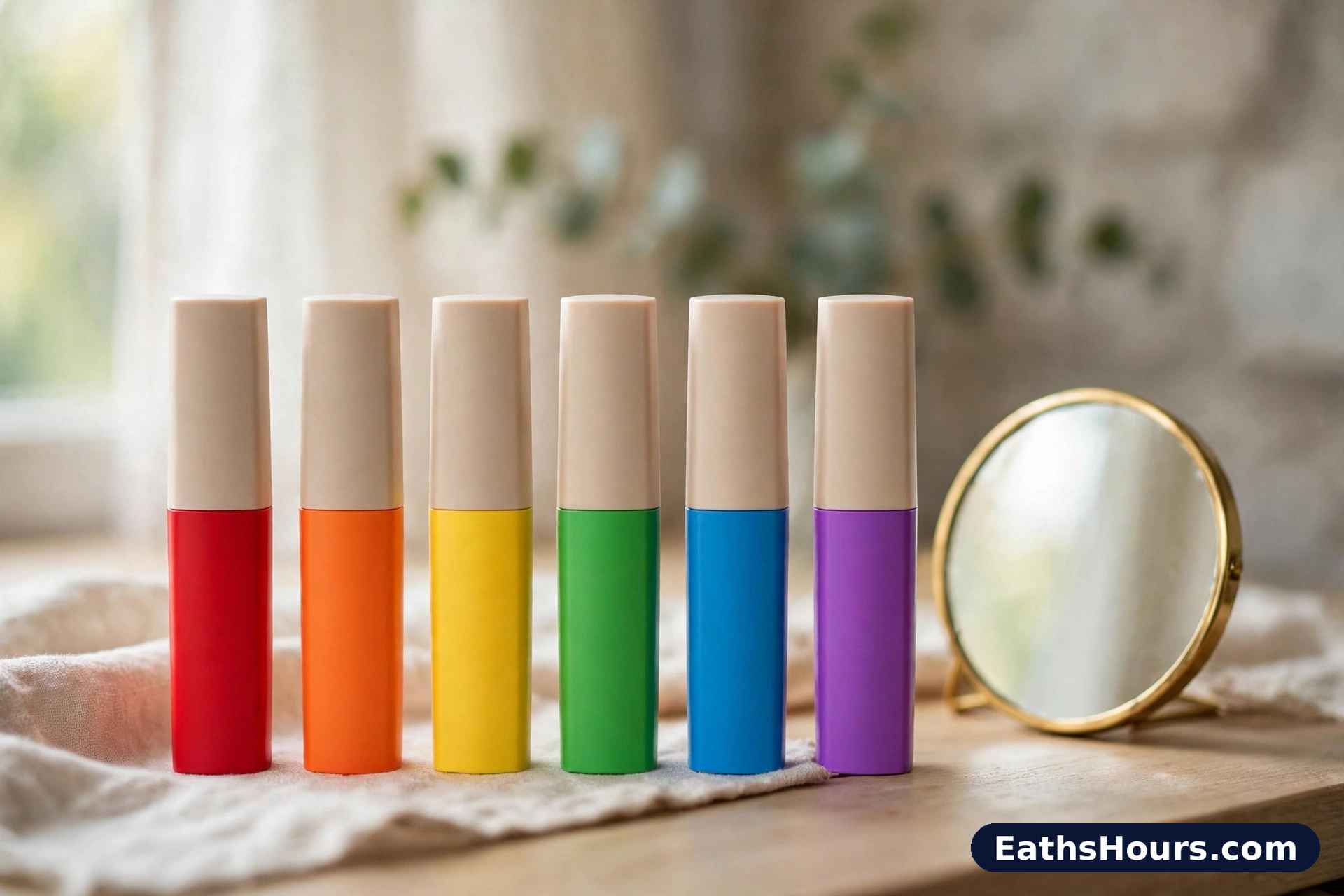
The one correction of emphasis this section needs is that the lip colours themselves — the subject of the guide’s how-to section — do the work: the shadows, glitter and blush are accompaniment. And the obvious completion of the record: this section, like the guide’s whole page, belongs entirely to the lipstick sense. The slang sense has no make-up, no look and no palette; its “colours” are a metaphor inside a name, and any page that answers a make-up question for this phrase without saying so is, once again, answering for one subject while standing in the other’s search results.
What Health Sources Actually Say About the Risks
The honest health record has two layers, and keeping them apart matters more here than anywhere else on the page. The first layer is what can be said about each practice from general, well-documented principles. The second layer is what has actually been studied — and for this phrase, the second layer is close to empty, which is itself the finding a reader most needs.
For the lipstick practice, the documented risks are the guide’s own three, and they are mundane: shared lip products and saliva exchange can pass common infections, and cosmetic products can provoke allergic reactions in some wearers. Nothing in any source checked elevates the practice beyond that ordinary hygiene profile, and this article does not elevate it either.
For the slang sense, no study, survey or clinical source addresses the act itself — the explainer sites concede there is no reliable data, and no health authority has published guidance under this name. What authorities have documented, thoroughly, is the category the act belongs to: unprotected oral sex involving blood and semen. The CDC’s guidance on oral sex states that many sexually transmitted infections spread through oral sex, and lists the infections that can be passed that way as chlamydia, gonorrhea, syphilis, herpes, HPV and HIV. The same guidance puts the chance of getting or transmitting HIV from oral sex at little to none, while noting that other infections transmit readily through it, that sores in the mouth or on the genitals and poor oral health are among the factors that may raise the chances of infection, and that barrier methods used every time reduce the risk. Blood exposure is the act’s distinguishing feature, and blood is a documented vehicle for HIV and the hepatitis viruses in health authorities’ general guidance — which is why the explainer sites, whatever their other embellishments, are consistent on one point this article can endorse at their level: the act is not risk-free, and the absence of act-specific studies is not evidence of safety.
Set against that record, the guide’s FAQ answer — safe, if you observe hygiene — is exposed as an answer about lipstick wearing the authority of an answer about the phrase. A reader who arrived asking about the slang sense and left with that sentence has been misinformed by omission, and the omission, not any single sentence, is the guide’s real defect.
Frequently Asked Questions (FAQ)
1. Is a rainbow kiss safe?
It depends which of the two subjects is meant — the question has two answers because the phrase has two meanings. The lipstick practice is low-stakes with the guide’s own hygiene rules kept: your own lipstick, no strangers, decent cosmetics. The slang act is not risk-free: it involves oral sex and contact with blood, a category for which health authorities document real infection risk, set out in the health section above.
2. Can you make a rainbow kiss at home?
The guide’s “of course” is right about its own subject: the lipstick effect needs only a few bright shades and willing participants, and home is where the trend mostly lives. For the slang sense this page prints no instructions of any kind, at home or anywhere else — the section on the slang record explains what the term denotes and stops there, deliberately.
3. Which colours are best to use?
For the lipstick practice, the guide’s answer stands: the brighter and more contrasting the shades, the more striking the gradient — neighbouring colours that are too close in tone blur into one another and the rainbow is lost. For the slang sense there is no palette to choose: its colours are a metaphor inside the name, not a shopping list.
4. Is a rainbow kiss suitable for everyone?
Not as the guide’s blanket “yes” claims. The lipstick game is a party and make-up activity, suitable for whoever enjoys it. The phrase itself, in its slang sense, is adult sexual vocabulary from adult slang sources — so the phrase is not age-neutral, and any page presenting it as suitable for all ages without separating the senses is repeating the guide’s error.
Conclusion
One phrase, two subjects, and a guide that documents only the prettier one. The lipstick rainbow kiss is a real, harmless social-media practice, and the guide describes it accurately — its definition, its mechanism, its hygiene cautions and its place in youth culture all survive checking. The slang rainbow kiss is equally real as a piece of language: recorded in slang dictionaries for two decades, defined consistently everywhere it is defined, and attached to a documented category of health risk that no authority calls safe. What does not survive checking is the silence between the two — a page that answers the phrase’s meaning, method and safety while never disclosing that most of its searchers mean something else entirely.
The practical inheritance is the separation itself. Before trusting any page’s answer about a shared name — what it means, whether it is safe, who it is for — establish which subject the page is describing, because the answers are not interchangeable and the safety answers least of all. The authorities worth resting on are the ones that document their category plainly, the way the CDC documents sexually transmitted infections and their routes, rather than the ones that inherit a template and a reassuring answer. Two rainbows share this name. Only one of them is make-up.